In the fast-paced world of food manufacturing, machines may drive production, but it is the people who keep the entire system running. From maintaining hygienic operations to managing complex automation systems, a skilled and knowledgeable workforce is central to ensuring quality, safety, and efficiency. Yet, across the industry, many companies continue to face a widening skills gap. As automation, digitalization, and mechanization reshape production floors, employees need more than traditional factory experience—they require a blend of technical know-how, food safety awareness, and adaptive problem-solving.
At Beyzon Foodtek, which supports clients in operations excellence, mechanisation, automation, and digitalization, workforce development is not just a supporting activity but a strategic pillar of manufacturing success. The transformation of Jabsons Foods Pvt. Ltd., where structured training, organisational redesign, and mechanisation drove remarkable improvements in on-time performance, exemplifies how investing in people amplifies every technological gain. A skilled team is the link that connects innovation with real-world outcomes.
1. Recognizing Training as a Strategic Imperative
Training and development in food manufacturing go beyond mere compliance or induction. They embed critical thinking, safety culture, and operational consistency throughout the organization. In food production, mistakes or lapses in hygiene, equipment handling, or process control can lead to product recall, contamination, or regulatory penalties. Training reduces this risk by equipping employees with domain knowledge, procedural discipline, and situational judgment.
For food manufacturers, a well-structured training program enhances efficiency, reduces errors, improves throughput, and supports operational resilience. It also elevates employee satisfaction and retention, since workers are more likely to stay in organizations that invest in their growth.
At Beyzon Foodtek, training is not an afterthought—it is integrated into project design and operations consulting. When we deliver a greenfield or brownfield project, workforce readiness is a parallel stream, alongside engineering, process layout, automation integration, and HSE readiness.
2.Conducting a Needs Assessment and Skill Audit

Beyzon’s approach embeds this step within its Operations Management & Excellence framework. We help clients conduct a skills audit that captures task-level capabilities, technical knowledge, and knowledge of standards (e.g. HACCP, ISO 22000, HSE protocols). The outcome is a competency matrix that maps roles to learning paths.
Skill audits often reveal common weaknesses: inability to interpret control dashboards, poor understanding of sanitation protocols, weak preventive maintenance skills, and limited cross-functional awareness.
3.Tailoring Training Modules
Training in a food plant must be experiential, not merely theoretical. Classroom sessions on microbial dangers, allergen control, or hazard identification must be complemented by guided practice on equipment under supervision. For example, hygiene rounds, cleaning protocols, safety drills, and calibration exercises should run on the actual lines.
For automation and digital modules, simulations and role-play help. Let operators interact with HMI screens, fault logs, downtime alerts, and basic troubleshooting in a controlled environment before real-time deployment. This approach ensures confidence and minimizes disruption when plants run at full speed.
4.Building Technological, Analytical & Digital Skills
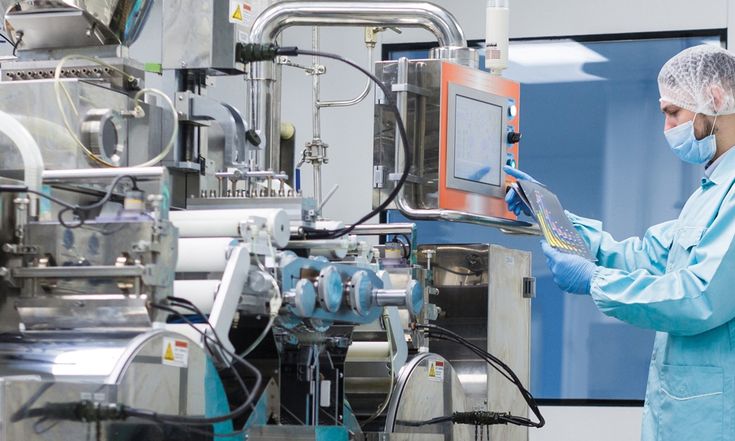
As plants evolve, operators must do more than push buttons—they must interpret data, monitor trends, respond to warnings, and trigger preventive interventions. This demands a level of technological literacy not traditionally required in food plants.
Beyzon’s Digitalization in Manufacturing services bring dashboards, sensors, process metrics, and alerts into everyday visibility. But introducing such systems demands parallel training so operators can read dashboards (e.g., OEE, downtime, yield), identify anomalies, and take action.
By empowering the workforce to engage with data rather than just machines, a plant becomes more responsive and agile. Malfunctions can be anticipated, deviations caught early, and waste minimized through immediate local intervention.
5.Encouraging Cross-Functional Learning
Silos between production, quality, maintenance, and hygiene teams often hinder responsiveness. Encouraging cross-functional understanding builds agile teams that can coordinate responses, fill gaps in emergencies, and understand upstream/downstream impact.
In capacity scaling or rebalancing projects, for instance, a technician who understands downstream constraints can better plan preventive maintenance or adjust input flow. Similarly, quality teams aware of line mechanics may better calibrate checks to minimize false rejections.
Beyzon’s training frameworks promote rotational exposure, joint problem-solving workshops, and shared learning sessions so that the workforce becomes holistic in perspective.
6.Measuring Training Effectiveness via KPIs
Training initiatives must be tied to metrics to justify investment and drive improvement. Common evaluation criteria include improvements in OEE, reduced defect rates, lowered downtime, improved compliance audit scores, or increases in first-pass yield (FPY).
Within its Operations Excellence framework, Beyzon Foodtek aligns learning outcomes to operational KPIs. For example, completion of a calibration module may be tied to reduced equipment variances or fewer line stoppages. Regular feedback loops—from supervisors and trainees—help refine curriculum, delivery methods, and assessment cadence.
Moreover, longitudinal tracking (quarterly or annual) helps show ROI: how much improvement in productivity or reduction in waste is attributable to the training.
7. Creating a Continuous Skill-Building Ecosystem
Skill development must be ongoing. As technology evolves, process changes, and regulatory standards tighten, the workforce must continuously upskill. Static training drives obsolescence.
Beyzon Foodtek’s role extends beyond one-time programs. We offer technology support, auditing, refresher workshops, and update modules keyed to emerging trends—whether AI in process control, predictive maintenance, or advanced packaging innovations.
A well-trained workforce becomes a differentiator: not only can they operate facilities efficiently and safely, they also anticipate change, propose improvements, and sustain high performance over time.
Case Study: Jabsons Foods, Transforming from Traditional Snack Maker to Operational Excellence Leader
When Beyzon Foodtek joined hands with Jabsons Foods Pvt. Ltd. the scope quickly expanded beyond conventional consulting. Appointed initially as Operational Excellence consultants, Beyzon began by solidifying the foundation, helping Jabsons design a future-ready organogram, upgrade infrastructure, and institutionalize functions such as HR, PPIC, and human safety. According to Rahul Agrawal, “they have provided their services far beyond operations excellence,” taking responsibility for hiring critical leadership roles and driving structural alignment.
The impact was tangible. Before the intervention, Jabsons’s OTIF (On Time In Full) performance hovered around 40–45%. In less than a year, that metric climbed to 70–75%, with ambitions to reach 80–90%. Alongside process improvements, Beyzon supported small mechanizations and automation inserts to reduce manual load and enhance consistency.
Eventually, confidence in the partnership led Jabsons to award Beyzon a greenfield project, a 50-ton-per-day namkeen facility spanning over one lakh square feet, further cementing the trust in Beyzon’s integrated approach.
Final Thoughts
In food manufacturing, success is as much about people as it is about machines and process design. Training and development transform workforce capacity from a cost center into a strategic asset. With proper diagnostics, targeted modules, integration of digital tools, cross-disciplinary learning, and rigorous measurement, manufacturers can bridge the skills gap and sustain long-term performance improvements.
The journey of Jabsons Foods Pvt. Ltd. stands as a clear reflection of this philosophy. By focusing on workforce capability, structural alignment, and continuous improvement, Beyzon Foodtek helped translate operational theory into measurable results—raising efficiency, accountability, and technological readiness across the board. It is proof that when people are equipped to grow, systems follow suit.
At Beyzon Foodtek, every engagement is built on that principle: technology thrives when people do.
Frequently Asked Questions (FAQ)
1.What are the most critical skills food manufacturing employees should possess today?
Employees should master technical operations, food safety protocols, basic equipment maintenance, data interpretation, and digital system literacy. Soft skills like teamwork, problem-solving, and adaptability are equally vital as automation and mechanization increase.
2. What are common mistakes companies make while implementing training programs?
Typical pitfalls include treating training as a one-time event, using generic content not tied to plant needs, skipping post-training evaluation, or failing to link learning to performance KPIs.
3.Can smaller food plants adopt these programs affordably?
Yes. Modular, progressive training allows SMEs to invest incrementally and scale competency over time.
4.What’s the ideal frequency for skill audits or re-assessments?
Skill audits should be conducted annually or after major technological or process changes. Interim assessments every six months help track progress and identify emerging gaps early.
5.How can SMEs measure training ROI effectively?
SMEs can start small—track indicators like reduced downtime, fewer customer complaints, improved yield, or audit pass rates. Over time, these metrics demonstrate direct operational and financial impact.
Key Source Reports
- Taking charge: Manufacturers support growth with active workforce strategies — Deloitte & The Manufacturing Institute (2024) — forecasts up to 3.8 million additional manufacturing workers needed, with 1.9 million roles at risk of remaining unfilled. Source : https://www.deloitte.com/us/en/insights/industry/manufacturing-industrial-products/supporting-us-manufacturing-growth-amid-workforce-challenges.html
- Bridging the Skill Gap in the Indian Food Processing Sector: A Review (Dixit & Ravichandran, 2022) — discusses projected 44.34 million new jobs in food processing and the persistent lack of formal training among workers.
PDF: https://www.i-scholar.in/index.php/fijrfn/article/download/217902/201831 - Agarwal, Rahul. Interview on Beyzon Foodtek’s Operational Excellence Project at Jabsons Foods Pvt. Ltd. (Interview – Bharuch, 2025)