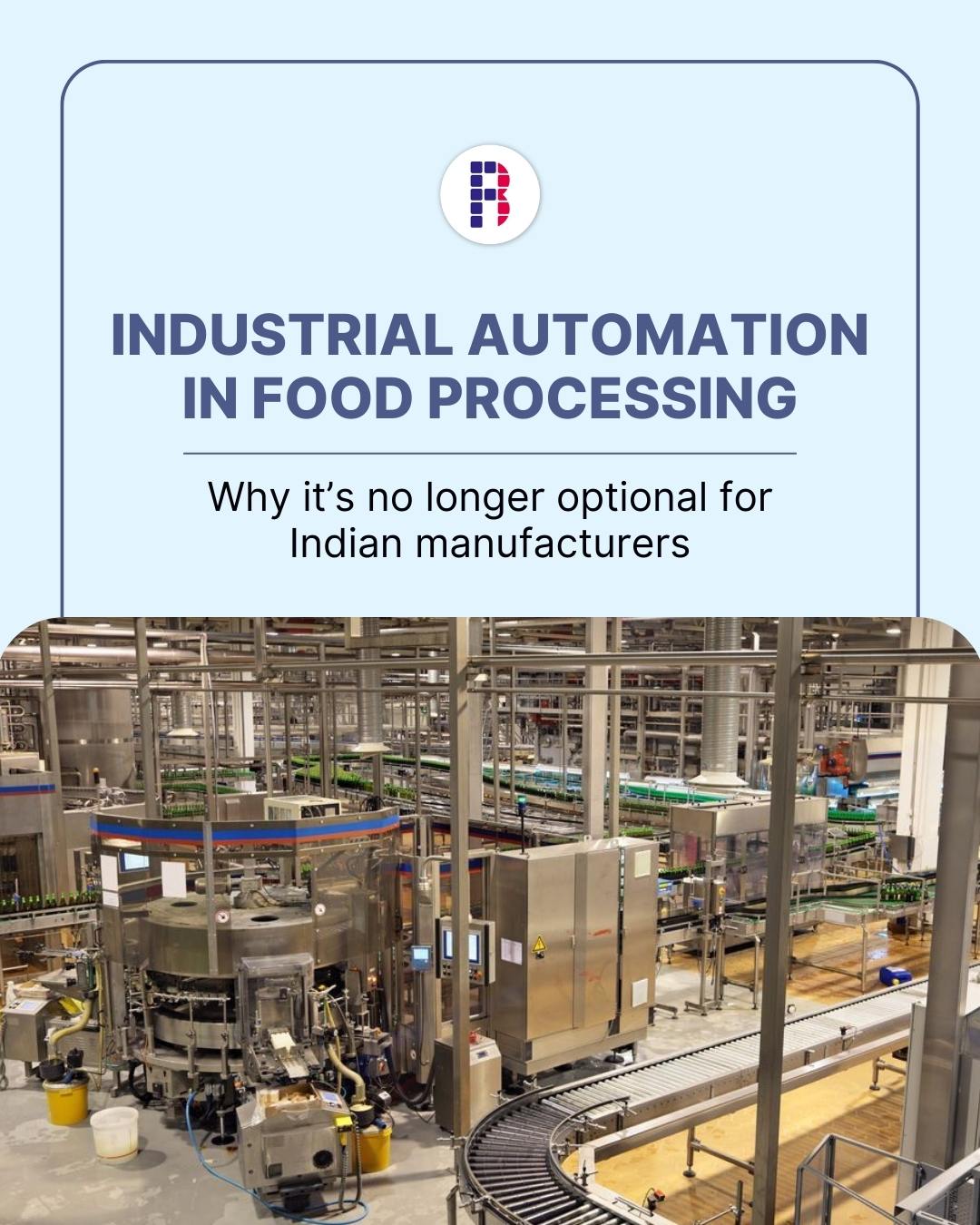
In the modern food manufacturing landscape, industrial automation is no longer a futuristic concept—it is a necessity. Automation in food processing plants improves production speed, ensures product consistency, minimizes human error, and supports compliance with hygiene and safety standards. For Indian food manufacturers striving to meet global benchmarks while optimizing costs, automation provides a strategic advantage.
This blog offers a comprehensive introduction to industrial automation for food processing, including its benefits, key technologies, challenges, and tips for effective implementation.This blog offers a comprehensive introduction to industrial automation for food processing, including its benefits, key technologies, challenges, and tips for effective implementation.
What Is Industrial Automation?
Industrial automation involves using control systems such as computers, sensors, robotics, and information technologies to handle different processes in manufacturing—replacing or assisting manual labour. In food processing, automation can be integrated into:
- Raw material handling.
- Processing and mixing
- Cooking and pasteurization
- Filling, packaging, and labeling
- Inspection and quality control
- Inventory and logistics management
By automating these repetitive and critical processes, manufacturers reduce human involvement while improving efficiency and traceability.
Why Food Manufacturers Are Turning to Automation
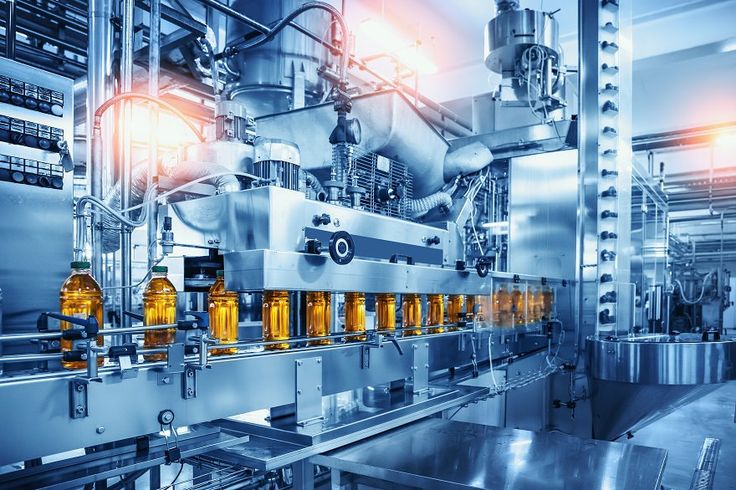
The Indian food processing industry is one of the fastest-growing sectors, contributing significantly to the economy. As consumer demand increases for safe, affordable, and high-quality products, the following drivers are pushing companies toward automation:
- Scalability Needs :
Traditional manual setups limit scalability. Automation allows businesses to expand operations without a proportional increase in manpower. - Hygiene & Safety Compliance:
Automated systems help ensure compliance with FSSAI and international food safety standards by reducing contamination risks. - Consistency and Quality Control:
Machines perform tasks with uniformity, ensuring consistent taste, texture, and appearance in food products. - Labour Shortages & Cost Pressures:
With skilled labour becoming increasingly scarce and costly, automation fills the gap while reducing long-term operational costs. - Demand for Customization and Innovation:
Automated systems can be reprogrammed to adapt to new recipes or packaging formats more easily than manual setups.
Core Technologies in Food Processing Automation

The journey toward automation doesn’t necessarily mean a full overhaul. Manufacturers can adopt automation in stages by integrating key technologies based on their plant’s needs.
- Programmable Logic Controllers (PLCs)
PLCs are used to control machinery and production lines with precision and reliability. They form the backbone of many automated food processing systems. - SCADA Systems
Supervisory Control and Data Acquisition (SCADA) systems allow operators to monitor and control processes remotely in real-time—essential for preventive maintenance and process optimization.
(Read more about this in Beyzon’s blog on Top Metrics to Track Operational Efficiency.) - Sensors and IoT Devices
These devices collect real-time data on temperature, moisture, pressure, and flow rate. This helps maintain process accuracy and supports traceability across the supply chain. - Robotics and AI
Used primarily in packaging and palletizing, robotic arms can handle tasks such as sorting, loading, or even slicing with minimal human supervision. AI-driven systems enhance decision-making by predicting machine failures or recommending process changes. - Vision Inspection Systems
These systems use cameras and AI to identify defects or irregularities in product shape, size, colour, or label accuracy—critical in quality control.
Benefits of Automation in Food Processing Plants
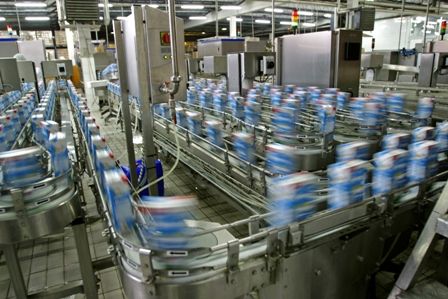
Implementing automation can lead to transformative benefits:
Increased Productivity
Automated systems can operate 24/7 without fatigue, enabling faster production cycles and improved capacity utilization.
Cost Efficiency
While the initial investment may seem high, automation reduces energy waste, raw material loss, and workforce dependency—offering long-term savings.
Improved Safety and Cleanliness
Automation reduces direct human contact with food, lowering contamination risk and improving hygiene standards.
Data-Driven Decision Making
Modern systems generate valuable production data that can be analyzed for insights into process improvements, energy use, and supply chain management.
(Also see: Capacity Planning vs. Capacity Balancing to learn how automation aligns with smarter resource use.)
Common Challenges and How to Overcome Them
High Initial Investment
One of the biggest barriers is cost. However, government subsidies under schemes like the PLI (Production-Linked Incentive) can ease this burden.
Workforce Resistance
Operators may fear job loss or struggle to adapt to new systems. Proper training and phased implementation help foster acceptance.
Integration with Legacy Systems
New technology must work seamlessly with existing equipment. Choosing modular and scalable automation solutions is key.
Cybersecurity
As systems go digital, protecting data and networks becomes essential. Regular security audits and firewalls should be implemented.
(Beyzon’s post on Preventive Maintenance outlines how proactive planning can reduce technical downtime—even in highly automated environments.)
How to Get Started with Automation: A Step-by-Step Guide
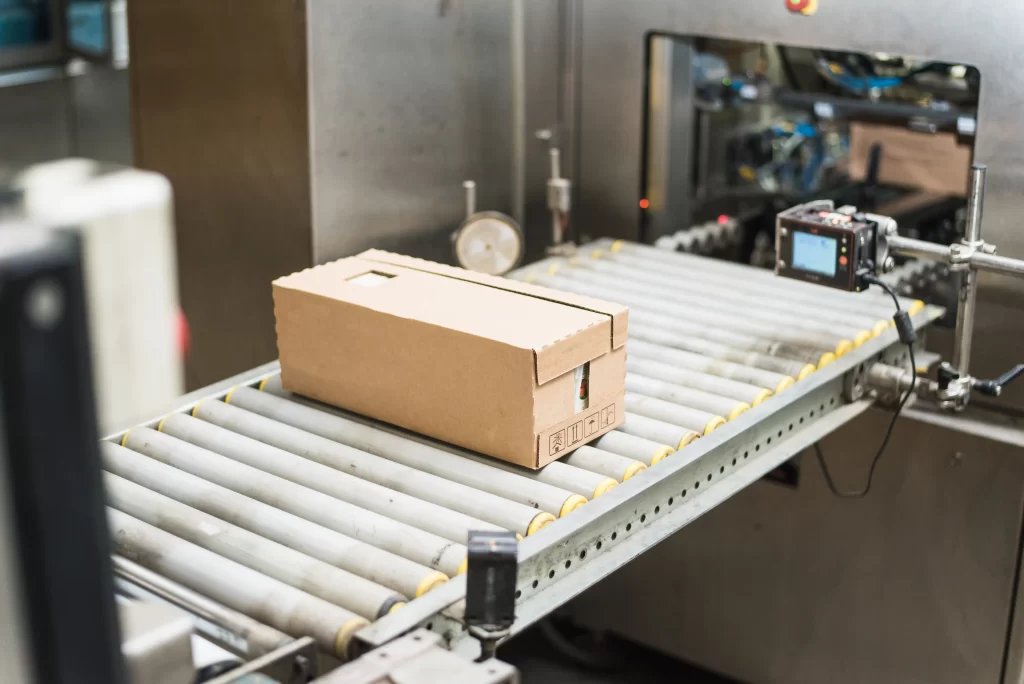
- Evaluate Your Current Setup Conduct an audit to understand your existing operations, bottlenecks, and potential for automation.
- Define Your Goals Is your aim to boost production, enhance quality, or reduce human error? Clarity helps define priorities and budgets.
- Choose the Right Partner Collaborate with a solutions provider who understands the unique challenges of the food processing industry. Beyzon Foodtek offers customized automation and packaging systems tailored to Indian manufacturers.
- Start Small and Scale Gradually Begin with a single line or process—like packaging—and expand after proving ROI.
- Train Your Workforce Upskill your existing staff with proper training to operate and maintain automated systems safely and efficiently.
- Track and Measure Results Monitor productivity, downtime, and product quality before and after implementation to assess success and identify areas for improvement.
Future of Automation in Indian Food Processing
The future is clear: smart factories are coming. Automation will be increasingly integrated with AI, machine learning, and cloud computing to create intelligent, self-optimizing production environments. For food manufacturers, this means higher flexibility, faster market response, and better product personalization.
As India aims to become a global food manufacturing hub, companies that adopt automation early will have a definitive competitive edge.
Conclusion
Industrial automation is transforming how food processing plants operate—enhancing speed, safety, and scalability. For Indian food manufacturers, embracing automation is not just about staying current; it’s about preparing for the future of smart manufacturing. At Beyzon Foodtek, we’re committed to supporting this transition with tailored solutions for food processors across the country.
FAQs on Industrial Automation in Food Processing
Q. Is automation suitable for small and medium-sized food businesses in India?
Yes. Scalable automation solutions are now available for SMEs. Start with critical areas like packaging or mixing to gradually automate your operations.
Q. Will automation eliminate the need for human workers?
No. While automation reduces manual effort, it shifts human roles toward supervision, maintenance, and quality assurance—creating new skilled job opportunities.
Q. What is the ROI timeline for food processing automation?
ROI depends on the size of the investment and production volume. However, many companies report noticeable cost savings and efficiency gains within 1–2 years.
Q. Can I automate just one part of my food processing line?
Absolutely. You can choose to automate just the packaging, cooking, or inspection process based on your goals and budget.
Q. How do I maintain automated machines?
Regular servicing, operator training, and predictive maintenance software help keep automated machines in top condition.