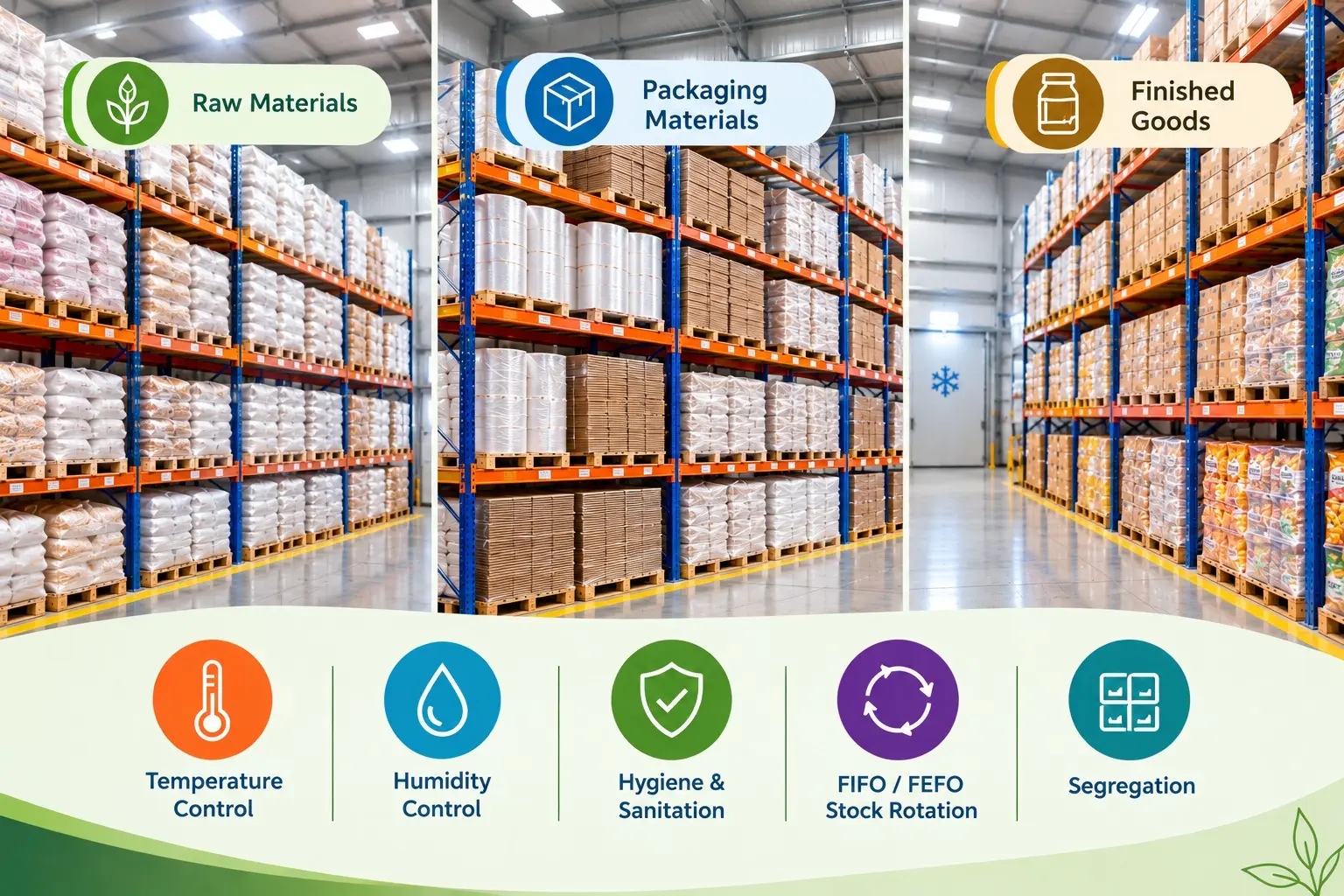
Storage is a critical part of food manufacturing because the condition of materials can directly influence product quality, food safety, shelf life, and production continuity. Raw materials, packaging materials, and finished goods may have different storage requirements based on their physical, chemical, microbiological, and functional characteristics.
Inadequate storage conditions can lead to moisture absorption, pest activity, microbial growth, contamination, packaging deterioration, stock losses, and product quality failures. Effective storage management therefore requires appropriate environmental conditions, segregation, inventory controls, and monitoring systems.
For Beyzon Foodtek Pvt. Ltd., storage management is an important component of Operations Management & Excellence, helping food manufacturers establish controlled material flows, reduce losses, and maintain product quality throughout the manufacturing and distribution process.
Why Are Storage Conditions Important?
Materials can deteriorate when exposed to unsuitable environmental or handling conditions.
Poor storage practices may result in:
- Microbial contamination
- Moisture absorption
- Pest infestation
- Oxidation and rancidity
- Packaging deterioration
- Cross-contamination
- Product quality variation
- Material wastage
- Reduced shelf life
- Production interruptions
Storage conditions should therefore be established according to the specific requirements of each material or product.
Storage Conditions for Raw Materials
Raw materials often have significantly different storage requirements depending on their characteristics.
Common considerations include:
- Temperature
- Relative humidity
- Light exposure
- Ventilation
- Pest control
- Allergen segregation
- Hygienic handling
- Shelf-life control
Dry ingredients such as grains, flour, spices, and powders generally require clean, dry, well-ventilated storage with controlled moisture exposure.
Temperature-sensitive ingredients may require refrigerated or frozen storage, while certain materials may require controlled conditions to prevent oxidation, microbial growth, or physical deterioration.
Raw materials should also be stored in a manner that prevents contact with floors, walls, and potential contamination sources.
Packaging Material Storage
Packaging materials are often overlooked because they do not become part of the food itself. However, packaging can directly influence product protection and food safety.
Storage areas should protect packaging materials from:
- Dust
- Moisture
- Pests
- Chemicals
- Physical damage
- Uncontrolled environmental exposure
Packaging should remain protected in suitable secondary packaging or covered storage until required for production.
Different packaging materials may also require specific handling conditions to prevent deformation, contamination, or loss of functional performance.
Storage Conditions for Finished Goods
Finished goods must remain within specified storage conditions until dispatch.
Important parameters may include:
- Temperature
- Relative humidity
- Light exposure
- Ventilation
- Product segregation
- Palletization
- Stock rotation
Temperature-sensitive products may require refrigerated or frozen storage, while shelf-stable products generally require controlled ambient conditions.
Finished goods should also be protected from physical damage, contamination, pests, and adverse environmental conditions.
Temperature and Humidity Control
Environmental conditions should be monitored according to product and material specifications.
Important controls may include:
- Temperature monitoring
- Relative humidity monitoring
- Data loggers
- Alarm systems
- Calibration of monitoring instruments
- Corrective action procedures
Monitoring should provide sufficient visibility to identify deviations before they compromise material or product quality.
For temperature-controlled storage, continuous or appropriately frequent monitoring can provide evidence that required conditions are being maintained.
Segregation and Hygienic Storage
Storage design should prevent incompatible materials from creating contamination risks.
Appropriate segregation may be required for:
- Raw materials and finished products
- Allergens and non-allergens
- Food and non-food materials
- Chemicals and food materials
- Rejected and approved materials
- Packaging and maintenance materials
Clear identification and defined storage locations help reduce handling errors and cross-contamination.
Inventory Control and Stock Rotation
Storage management is also closely connected to inventory control.
Common stock rotation systems include:
FIFO — First In, First Out
and
FEFO — First Expired, First Out
FEFO is particularly important for materials and products with defined expiry dates.
Effective inventory control helps manufacturers:
- Reduce material expiry
- Minimize inventory losses
- Improve traceability
- Maintain stock accuracy
- Prevent obsolete inventory
- Improve production planning
Common Storage Challenges
Food manufacturers may encounter several storage-related problems, including:
- Temperature fluctuations
- Excessive humidity
- Poor warehouse layout
- Inadequate pest control
- Incorrect stock rotation
- Poor material identification
- Insufficient segregation
- Overstocking
- Damaged packaging
- Inadequate monitoring
These issues can affect both product quality and operational efficiency if not addressed systematically.
Storage and Operations Excellence
Effective storage management contributes directly to Operations Management & Excellence by maintaining material quality and supporting uninterrupted production.
Well-controlled storage systems can help manufacturers achieve:
- Lower material wastage
- Better inventory accuracy
- Reduced product losses
- Improved traceability
- Stronger food safety controls
- Better production continuity
- Improved warehouse efficiency
- Consistent product quality
Storage is therefore not simply a warehousing activity. It is an important control point within the overall manufacturing system.
Performance Metrics That Matter
Manufacturers can monitor storage performance through indicators such as:
- Material wastage
- Inventory accuracy
- Expired stock
- Temperature deviations
- Humidity deviations
- Pest incidents
- Warehouse utilisation
- Product damage
- Stock rotation compliance
- Storage-related quality complaints
Regular review of these metrics helps identify weaknesses and improve warehouse performance.
The Role of Beyzon Foodtek Pvt. Ltd.
Beyzon Foodtek Pvt. Ltd. helps food manufacturers develop structured storage and material management systems as part of its Operations Management & Excellence framework.
Its expertise includes:
- Warehouse and storage planning
- Material flow optimization
- Storage condition assessment
- Inventory management systems
- Food safety systems
- SOP development
- Process optimization
- Performance monitoring
- Manufacturing digitalization
- Operational excellence initiatives
By integrating storage controls with broader manufacturing systems, Beyzon helps manufacturers reduce material losses, improve traceability, strengthen food safety, and maintain consistent manufacturing performance.
Conclusion
Appropriate storage conditions are essential for maintaining the quality and safety of raw materials, packaging materials, and finished goods. Temperature, humidity, hygiene, segregation, pest control, stock rotation, and monitoring should be managed according to the requirements of each material and product.
Manufacturers that establish structured storage systems can reduce wastage, improve inventory control, strengthen food safety, and support reliable production operations.
For Beyzon Foodtek Pvt. Ltd., effective storage management is an important part of developing controlled, efficient, and future-ready food manufacturing operations.
FAQs
1. Why are storage conditions important in food manufacturing?
They help protect raw materials, packaging, and finished goods from contamination, deterioration, damage, and quality loss.
2. What factors should be controlled during food storage?
Temperature, humidity, hygiene, pest activity, light exposure, segregation, and stock rotation may need to be controlled depending on the material or product.
3. What is the difference between FIFO and FEFO?
FIFO means First In, First Out, while FEFO means First Expired, First Out. FEFO prioritizes materials or products with the earliest expiry date.
4. Why should raw materials and finished goods be segregated?
Segregation helps prevent cross-contamination, handling errors, and unintended material movement.
5. How does effective storage support operational excellence?
It reduces material losses, improves inventory accuracy and traceability, strengthens food safety, and supports uninterrupted production.