A hygienic food processing facility depends on much more than modern equipment and effective sanitation practices. The design of the factory itself plays a significant role in maintaining food safety, and one of the most critical aspects of hygienic facility design is an efficient drainage system. Poor drainage can result in standing water, microbial growth, cross-contamination, structural damage, and unsafe working conditions, making it a major operational and food safety concern.
Food processing plants use large volumes of water for processing, equipment cleaning, Clean-in-Place (CIP) systems, sanitation, and utility operations. Unless wastewater is removed quickly and efficiently, it can create ideal conditions for microbial contamination while reducing operational efficiency. Proper drainage design, combined with correctly engineered floor slopes, helps maintain hygienic production environments and supports smooth manufacturing operations.
For Beyzon Foodtek Pvt. Ltd., drainage design forms an important part of Operations Management & Excellence by helping manufacturers build hygienic, efficient, and regulatory-compliant food processing facilities.
Why Drainage Design Matters
Water is used extensively throughout food manufacturing for washing raw materials, cleaning processing equipment, sanitizing production areas, and maintaining utilities. Without an effective drainage system, wastewater accumulates on production floors, increasing the likelihood of contamination, employee accidents, and equipment deterioration.
International food safety standards such as the Codex Alimentarius General Principles of Food Hygiene, BRCGS Food Safety, and FSSC 22000 emphasize that food establishments should be designed to allow rapid wastewater removal and prevent water accumulation. Proper drainage therefore contributes not only to food safety but also to regulatory compliance and operational efficiency.
For example, stagnant water near packaging or processing equipment may harbour microorganisms such as Listeria monocytogenes, making drainage design an important environmental control measure in ready-to-eat food facilities.
The Importance of Floor Slope
Floor slope is one of the most important design parameters affecting drainage performance. Even the most advanced drainage system cannot function effectively if wastewater does not naturally flow towards drainage points.
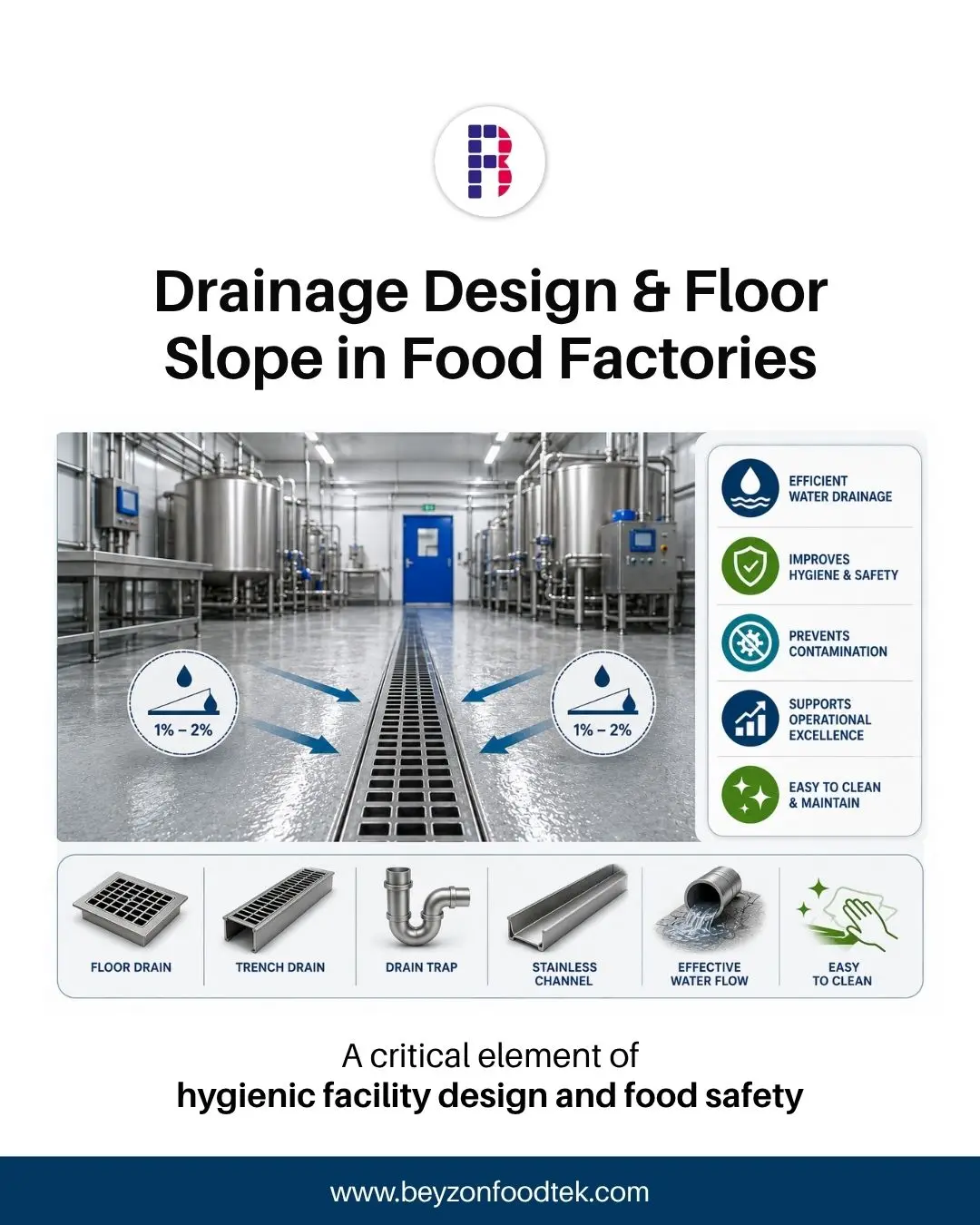
In food factories, floor gradients are generally designed between 1% and 2% (approximately 1:100 to 1:50) depending on water usage, cleaning frequency, and production activities. Areas subjected to intensive washdowns, such as meat, dairy, seafood, and beverage processing facilities, often require steeper slopes to ensure efficient water removal.
Proper floor slopes eliminate standing water, reduce cleaning time, improve employee safety, and prevent long-term deterioration of flooring systems.
Key Components of an Effective Drainage System
An efficient drainage system is designed to safely collect, transport, and discharge wastewater without creating contamination risks.
Typical drainage systems include floor drains, trench drains, stainless steel drainage channels, drain traps, underground piping networks, grease traps where applicable, and wastewater collection systems. These components should be designed with adequate capacity to handle peak cleaning operations while allowing easy inspection and maintenance.
Modern hygienic drainage systems also incorporate smooth internal surfaces, removable grates, and corrosion-resistant materials that simplify cleaning and reduce residue accumulation.
Hygienic Drainage Design Principles
Effective drainage design extends beyond simply removing wastewater. It should support hygienic operations by minimizing contamination risks throughout the production environment.
Important design considerations include smooth and easily cleanable drain surfaces, rounded internal corners, adequate drain capacity, proper trap seals to prevent odours, and sufficient accessibility for routine inspection and maintenance. Drainage systems should also be designed to prevent wastewater backflow and ensure that water from raw material areas does not flow into finished product zones.
These principles support hygienic zoning and help manufacturers maintain effective environmental hygiene programmes.
Common Drainage Problems in Food Factories
Poor drainage design often creates recurring operational challenges that become increasingly expensive to correct after plant commissioning.
Common issues include inadequate floor slopes, blocked drainage channels, standing water, unpleasant odours, damaged flooring, overflowing drains during sanitation, and corrosion caused by continuous water exposure. In facilities that have expanded over time, drainage systems originally designed for lower production volumes may become undersized, resulting in frequent operational disruptions.
Routine inspection, preventive maintenance, and periodic drainage assessments help identify these problems before they compromise food safety or production efficiency.
Drainage Design and Operations Excellence
Proper drainage contributes directly to Operations Management & Excellence by creating cleaner, safer, and more efficient manufacturing environments. Efficient wastewater removal reduces contamination risks while supporting consistent sanitation and production activities.
Well-designed drainage systems help manufacturers improve cleaning efficiency, strengthen food safety programmes, reduce maintenance requirements, improve employee safety, protect facility infrastructure, minimize production interruptions, and maintain compliance with regulatory and customer requirements. These improvements collectively contribute to higher operational reliability and sustainable manufacturing performance.
Performance Metrics That Matter
The effectiveness of a drainage system should be evaluated through measurable operational indicators.
Manufacturers commonly monitor:
- Environmental monitoring results
- Drain blockage frequency
- Water accumulation incidents
- Sanitation effectiveness
- Corrective maintenance requests
- Water consumption during cleaning
- Production downtime caused by drainage failures
Monitoring these indicators helps identify opportunities to improve both facility hygiene and operational performance.
The Role of Beyzon Foodtek Pvt. Ltd.
Beyzon Foodtek Pvt. Ltd. supports food manufacturers in developing hygienic infrastructure through its Operations Management & Excellence framework.
Its expertise includes:
- Hygienic factory layout planning
- Drainage and utility system design
- Food safety systems
- Manufacturing process optimization
- Standard Operating Procedures (SOPs)
- Infrastructure planning
- Performance improvement initiatives
- Sustainable operational excellence
By integrating hygienic drainage design with structured manufacturing systems, Beyzon helps manufacturers improve sanitation efficiency, strengthen food safety, reduce maintenance costs, improve operational reliability, and build future-ready food processing facilities.
Conclusion
Drainage design and floor slope planning are essential elements of hygienic food factory design. An effective drainage system removes wastewater efficiently, prevents water accumulation, supports sanitation programmes, and reduces contamination risks throughout the manufacturing environment.
Manufacturers that invest in properly engineered drainage infrastructure are better positioned to improve food safety, maintain regulatory compliance, reduce maintenance costs, and enhance operational efficiency.
Partner with Beyzon Foodtek Pvt. Ltd. to design hygienic food factories that support safe and efficient operations.
FAQs
1. Why is drainage important in food factories?
It removes wastewater efficiently, prevents standing water, and supports hygienic production.
2. What floor slope is commonly used in food processing plants?
Most facilities use floor slopes between 1% and 2%, depending on the application and cleaning requirements.
3. What problems can poor drainage cause?
Standing water, microbial growth, drainage blockages, equipment damage, and workplace safety hazards.
4. Which standards emphasize proper drainage design?
Standards such as Codex Alimentarius, BRCGS, and FSSC 22000 highlight the importance of effective drainage in hygienic food facility design.
5. How does good drainage improve manufacturing performance?
It improves sanitation, strengthens food safety, reduces maintenance issues, and supports efficient manufacturing operations.