Compressed air is often referred to as the “fourth utility” in manufacturing, alongside electricity, water, and steam. In food processing plants, it powers pneumatic equipment, operates packaging machines, controls automated systems, and, in many applications, comes into direct or indirect contact with food products. Despite its widespread use, compressed air is frequently overlooked as a potential source of product contamination and process inefficiency.
Poor compressed air quality can introduce contaminants such as oil, moisture, microorganisms, and solid particles into the manufacturing environment, affecting product quality, food safety, equipment reliability, and regulatory compliance. Since compressed air is regarded as a processing aid in many food manufacturing operations, maintaining its quality is essential for protecting both products and consumers.
For Beyzon Foodtek Pvt. Ltd., compressed air quality is an integral part of Operations Management & Excellence, helping manufacturers establish reliable utility systems that support safe, efficient, and compliant food production.
What Is Compressed Air Quality?
Compressed air quality refers to the cleanliness and condition of compressed air supplied throughout a manufacturing facility. It is determined by the concentration of contaminants such as solid particles, water, oil, and microorganisms that may enter the compressed air system during compression, storage, or distribution.
International standard ISO 8573 provides a widely accepted framework for classifying compressed air quality based on the permissible levels of these contaminants. Food manufacturers often define compressed air specifications according to the intended application, particularly where air comes into direct contact with food products or food-contact packaging.
Maintaining compressed air quality ensures that manufacturing processes remain consistent while reducing contamination risks and protecting production equipment.
Why Compressed Air Quality Matters
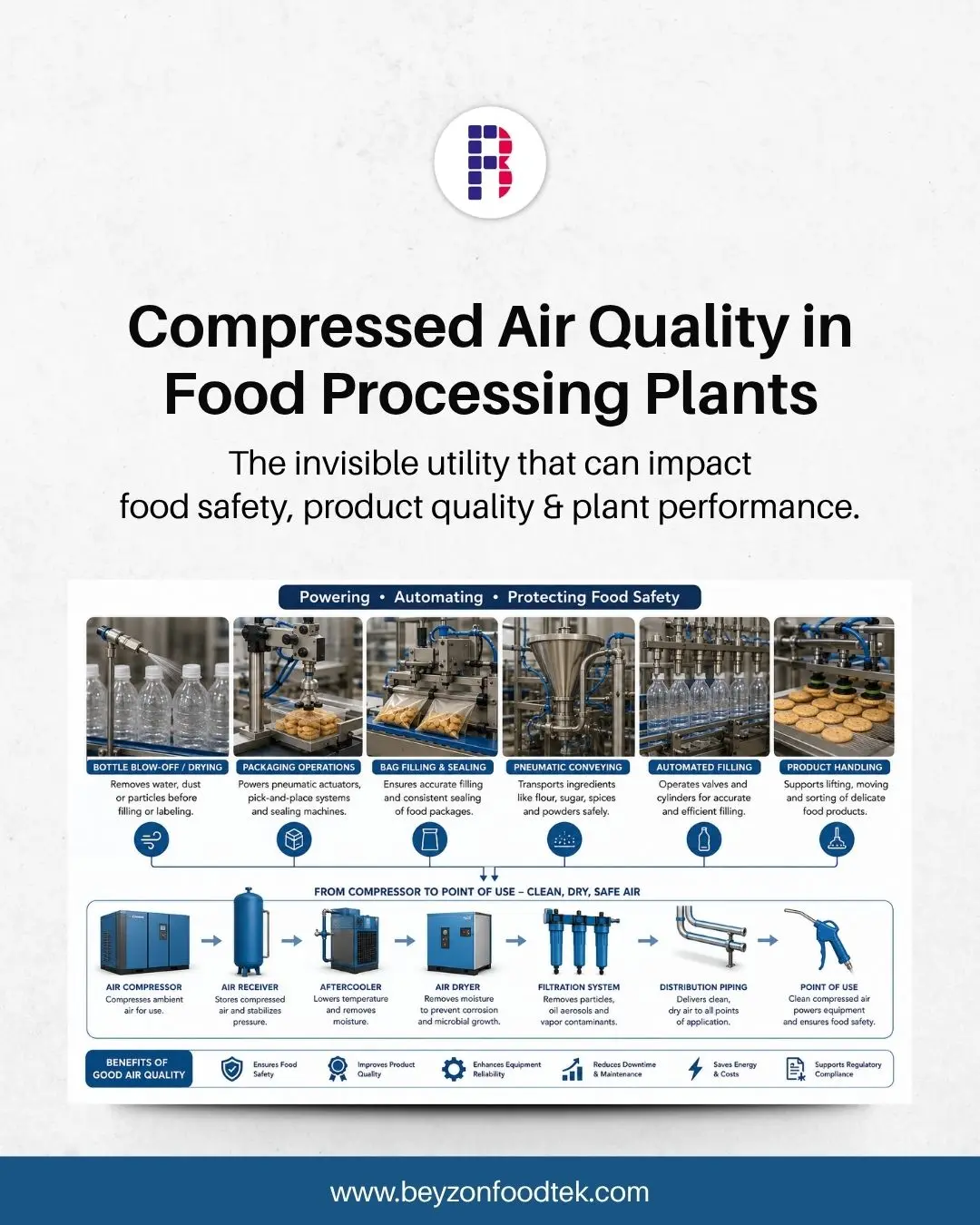
Compressed air is used throughout food processing, often in applications where contamination can directly affect product safety. It may be used for ingredient conveying, product drying, bottle blowing, packaging operations, pneumatic valves, automated filling systems, and cleaning processes.
If compressed air contains excessive oil, moisture, or particulate matter, manufacturers may experience:
- Product contamination
- Reduced shelf life
- Equipment malfunction
- Packaging defects
- Increased maintenance costs
- Product recalls
- Regulatory non-compliance
For example, moisture present in compressed air can encourage microbial growth inside distribution lines, while oil carryover from compressors may contaminate packaging materials or finished products. Effective compressed air management minimizes these risks and improves overall manufacturing reliability.
Sources of Compressed Air Contamination
Contaminants can enter compressed air systems from both the surrounding environment and the compression process itself.
Common contamination sources include:
- Atmospheric dust and airborne particles
- Moisture from ambient air
- Compressor lubricating oil
- Rust inside pipelines
- Condensate accumulation
- Microbial contamination
- Poorly maintained filters and dryers
Even clean ambient air contains millions of microscopic particles and water vapour that become concentrated during air compression. Without proper filtration and drying, these contaminants can circulate throughout the manufacturing system.
Compressed Air Treatment Systems
Producing food-grade compressed air requires more than simply installing an air compressor. Manufacturers use multiple treatment stages to remove contaminants before air reaches production areas.
A typical compressed air system includes:
- Air intake filters
- Oil separators
- Aftercoolers
- Air dryers
- Particulate filters
- Coalescing filters
- Activated carbon filters
- Air receivers
- Distribution piping
Each component performs a specific function in reducing contaminants and maintaining stable compressed air quality throughout the plant.
Monitoring and Verification
Compressed air quality should be monitored as part of the facility’s preventive maintenance and food safety programmes. Regular verification helps confirm that filtration systems continue to perform effectively and that contamination risks remain under control.
Monitoring activities may include:
- Oil content testing
- Dew point measurement
- Particle count analysis
- Microbiological testing
- Pressure monitoring
- Filter integrity checks
- Leak inspections
Facilities using compressed air in direct contact with food should establish documented testing frequencies based on risk assessment, product type, and regulatory or customer requirements.
Common Challenges in Food Processing Plants
Maintaining compressed air quality can become challenging as manufacturing systems age or production demands increase. In many facilities, compressed air systems receive less attention than production equipment, despite their critical role in food safety.
Common challenges include delayed filter replacement, inadequate condensate removal, leaking pipelines, oversized or undersized compressors, insufficient air drying capacity, and lack of routine compressed air testing. These issues not only increase contamination risks but also reduce energy efficiency, increase equipment wear, and affect production reliability.
Addressing these problems through preventive maintenance and regular monitoring helps improve both operational performance and food safety.
Compressed Air Quality and Operations Excellence
Reliable compressed air systems contribute directly to Operations Management & Excellence by supporting stable manufacturing processes and reducing production interruptions.
Manufacturers that effectively manage compressed air quality can achieve:
- Improved product consistency
- Stronger food safety systems
- Reduced contamination risks
- Higher equipment reliability
- Lower maintenance costs
- Reduced energy losses
- Improved manufacturing throughput
- Better regulatory compliance
A well-maintained compressed air system supports both operational efficiency and long-term manufacturing performance.
The Role of Beyzon Foodtek Pvt. Ltd.
Beyzon Foodtek Pvt. Ltd. helps food manufacturers strengthen utility management as part of its Operations Management & Excellence framework.
Its expertise includes:
- Utility system assessment
- Compressed air quality management
- Food safety systems
- Manufacturing process optimization
- Standard Operating Procedures (SOPs)
- Performance monitoring systems
- Manufacturing digitalization
- Sustainable operational excellence
By integrating compressed air quality management with robust manufacturing systems, Beyzon helps organizations improve manufacturing throughput, reduce contamination risks, optimize equipment performance, improve product quality, and build efficient, future-ready food processing facilities.
Conclusion
Compressed air is a critical utility that directly influences food safety, product quality, equipment performance, and manufacturing efficiency. Maintaining clean, dry, and contaminant-free compressed air requires structured system design, regular monitoring, preventive maintenance, and adherence to recognized quality standards.
Manufacturers that prioritize compressed air quality are better positioned to reduce operational risks, strengthen regulatory compliance, improve product consistency, and achieve sustainable operational excellence. For Beyzon Foodtek Pvt. Ltd., effective compressed air management is an essential part of building reliable and future-ready food manufacturing operations.
Partner with Beyzon Foodtek Pvt. Ltd. to improve compressed air quality and strengthen food safety.
FAQs
1. Why is compressed air important in food processing?
It powers manufacturing equipment and, in many applications, comes into direct or indirect contact with food products and packaging.
2. What contaminants are commonly found in compressed air?
Oil, moisture, solid particles, microorganisms, and condensate are the most common contaminants.
3. Which standard is used for compressed air quality?
ISO 8573 is the internationally recognized standard for classifying compressed air quality.
4. How is compressed air quality maintained?
Through proper filtration, air drying, regular monitoring, preventive maintenance, and routine testing.
5. How does compressed air quality improve manufacturing performance?
It reduces contamination risks, improves equipment reliability, strengthens food safety, and supports consistent manufacturing operations.