Food safety is the backbone of trust in the food manufacturing industry. For mid-sized manufacturers, maintaining compliance is not just about avoiding regulatory penalties—it is about ensuring consumer confidence, protecting brand equity, and enabling long-term growth. According to the World Health Organization, unsafe food causes nearly 600 million illnesses globally each year, making robust food safety systems an operational priority rather than a compliance checkbox.
In India, where the FSSAI (Food Safety and Standards Authority of India) regulations govern quality standards, and global players look for GFSI-benchmarked certifications, the role of Key Performance Indicators (KPIs) becomes vital. KPIs act as measurable benchmarks that help companies monitor, evaluate, and improve their food safety performance continuously.
This article explores the most important KPIs food manufacturers should track to ensure ongoing improvement in food safety.
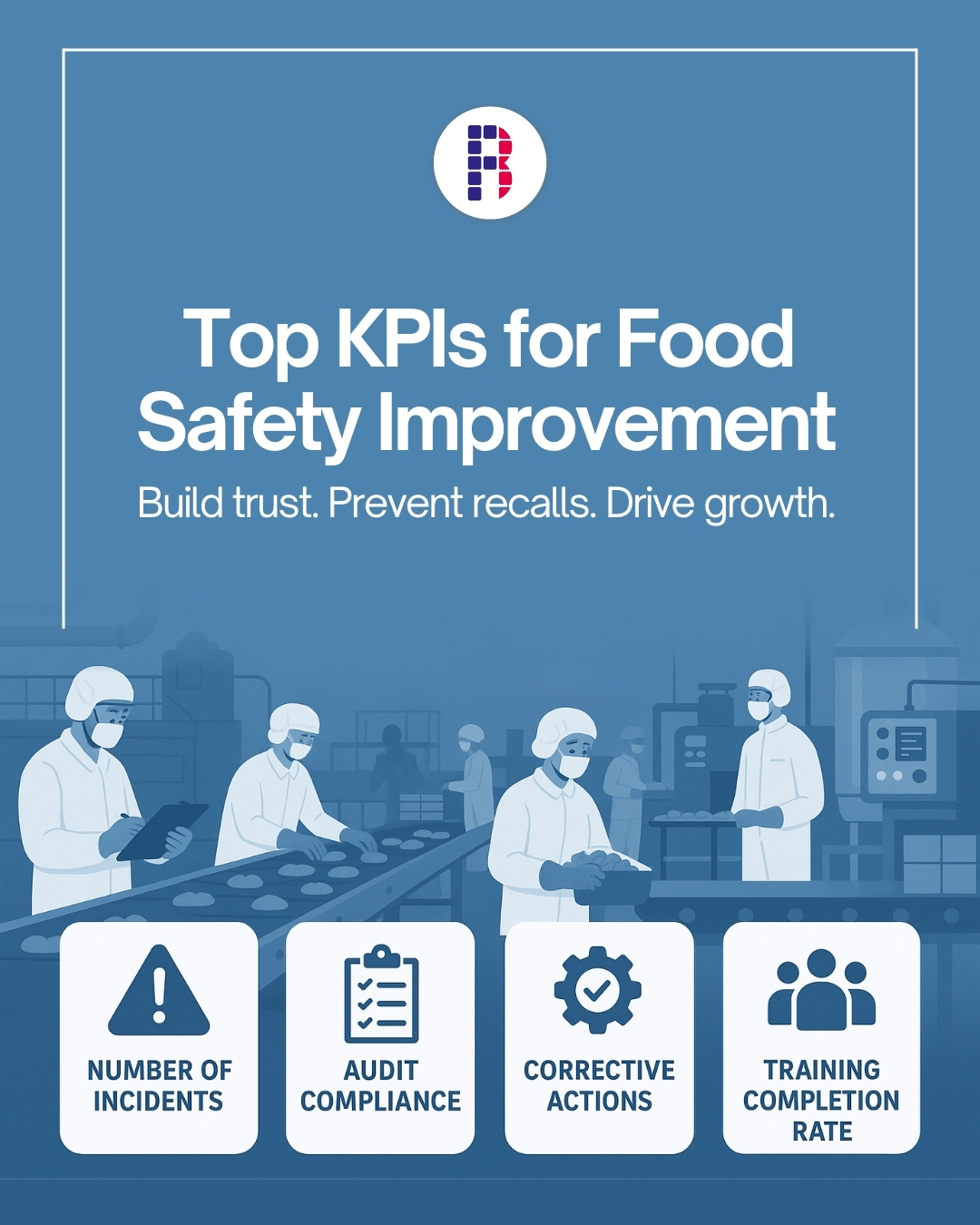
1. Non-Conformance Rate

This KPI measures the frequency of deviations from standard food safety procedures, whether during internal audits, external inspections, or production processes. A high non-conformance rate often indicates gaps in training, documentation, or process adherence.
Why it matters: Non-conformances, even minor ones, can snowball into significant issues like product recalls. For instance, a mid-sized Indian food manufacturer facing a recall may incur costs exceeding ₹70–80 crore when factoring in wasted product, logistics, penalties, and brand damage.
How to improve: Conduct regular food safety gap assessments, enforce corrective and preventive actions (CAPA), and maintain updated documentation. Organizations often rely on structured gap-assessment partners such as Beyzon Foodtek to systematically reduce non-conformances.
2. Audit Compliance Score

Both internal audits and third-party certifications assess how closely a facility follows safety regulations. The audit compliance score is a direct reflection of operational discipline.
Why it matters: Consistently high scores reduce the risk of non-compliance penalties and improve customer trust. Many retailers and global buyers prefer suppliers with documented strong audit performance.
How to improve: Train employees before audits, use digital checklists, and run surprise mock audits. Expert partners like Beyzon Foodtek often guide plants in preparing for both FSSAI and GFSI-benchmarked audits.
3. Corrective and Preventive Action (CAPA) Closure Rate
Identifying food safety issues is only half the battle. The speed and effectiveness with which corrective and preventive actions are closed define how resilient a system is. The CAPA closure rate measures the percentage of identified issues resolved within the stipulated timeline.
Why it matters: A slow closure rate indicates systemic weaknesses. For example, unresolved sanitation issues may lead to microbial contamination, increasing the risk of product rejections.
How to improve: Assign accountability to specific teams, track CAPAs digitally, and ensure management reviews progress regularly.
4. Employee Training and Competency Levels

In food safety, people are the frontline defense. This KPI measures not just the percentage of employees trained but also how effectively they understand and apply food safety practices.
Why it matters: Studies show that over 60% of food safety lapses globally are linked to human error, whether due to lack of training, poor hygiene practices, or misinterpretation of protocols.
How to improve: Conduct refresher programs, test knowledge retention, and create role-specific modules. External partners such as Beyzon Foodtek often design targeted training interventions that directly improve compliance and reduce human error.
5. Product Recall and Withdrawal Frequency
This KPI tracks how often products are recalled or withdrawn due to safety issues. While no company wants to face recalls, monitoring their frequency helps identify recurring root causes.
Why it matters: The financial burden of recalls is severe. Even a small-scale recall in India can cost upwards of ₹1–2 crore, while larger incidents may exceed ₹80 crore. Beyond costs, recalls damage customer trust, which can take years to rebuild.
How to improve: Strengthen supplier quality checks, implement traceability systems, and run recall simulations to ensure readiness.
6. Employee Training and Competency Levels

Environmental monitoring includes regular testing of surfaces, water, and air in food processing environments. This KPI measures the percentage of tests that meet safety standards versus those that show microbial or chemical contamination.
Why it matters: Environmental contamination often precedes product contamination. Early detection allows preventive action before unsafe products reach consumers.
How to improve: Implement robust sanitation SOPs, schedule swab testing at high-risk zones, and document results digitally for traceability. Companies like Beyzon Foodtek increasingly integrate monitoring data with digital dashboards to give management real-time visibility.
7. Supplier Compliance Rate
Raw materials are the foundation of safe food. This KPI measures how many suppliers consistently comply with safety requirements such as FSSAI registration, certifications, and quality audits.
Why it matters: Weak supplier compliance is a major cause of food safety failures. For example, contaminated milk or spices sourced from non-compliant vendors can jeopardize entire product lines.
How to improve: Develop approved supplier lists, conduct regular audits, and enforce penalties for repeated non-compliance.
8. Customer Complaint Rate
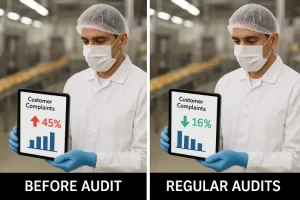
Tracking the number of food safety-related complaints from customers or distributors provides an external lens on performance.
Why it matters: While audits and inspections show internal control, customer complaints reveal how safety is perceived outside the factory walls.
How to improve: Establish responsive feedback systems, investigate complaints promptly, and integrate learnings into continuous improvement plans.
9. First-Pass Quality Yield
This KPI measures the percentage of products that meet quality and safety requirements without rework or rejection.
Why it matters: A low first-pass yield signals inefficiencies, either due to poor raw materials, operator errors, or inadequate process controls.
How to improve: Strengthen quality assurance checkpoints, adopt automation where feasible, and monitor process variables in real time.
10. Food Safety Culture Index
Beyond metrics, organizational culture plays a vital role. This KPI measures how well employees embrace food safety values, based on surveys, incident trends, and leadership behavior.
Why it matters: A strong food safety culture reduces lapses, ensures compliance, and fosters accountability. Without it, even advanced systems can fail.
How to improve: Promote leadership commitment, celebrate milestones, and communicate the importance of safety in daily operations.
Conclusion
For food manufacturers, KPIs are not just numbers—they are the pulse of an organization’s food safety system. By consistently tracking indicators such as non-conformance rate, audit compliance, CAPA closure, employee training, and supplier compliance, companies can shift from reactive problem-solving to proactive food safety excellence.
Key Takeaways
Food safety improvement requires continuous measurement. Tracking the right KPIs ensures mid-sized manufacturers not only meet compliance but also build consumer trust, prevent costly recalls, and achieve long-term resilience.
At Beyzon Foodtek, we help food manufacturers design and implement KPI-driven food safety systems. From gap assessments and training to digital monitoring and supplier audits, our solutions ensure measurable and ongoing food safety improvement.
Frequently Asked Questions (FAQ)
1. What are KPIs in food safety?
They are measurable indicators used to track and improve food safety performance across production, audits, suppliers, and employees.
2. Which KPI is most critical for manufacturers?
Non-conformance rate and audit compliance scores are among the most vital, as they directly highlight process gaps.
3. How do KPIs reduce product recall risks?
By monitoring CAPA closure and environmental testing, KPIs detect problems early, preventing unsafe products from reaching the market.
4. How often should food safety KPIs be reviewed?
At minimum, monthly. High-risk operations should track critical KPIs weekly or even daily.
5. How does Beyzon Foodtek support KPI tracking?
Beyzon provides digital tools, training, and assessments that help manufacturers track, analyze, and act on key food safety metrics effectively.