Finished Goods (FG) warehouses play a critical role in safeguarding food products after production and before they reach consumers. Even when food is manufactured under strict quality controls, inadequate safety protocols or poor hygiene practices in FG warehouses can lead to contamination, product damage, regulatory non-compliance, and brand reputation loss. Therefore, implementing robust safety and hygiene standards in food FG warehouses is not only a regulatory requirement but also a business necessity.
This blog outlines the essential safety protocols, hygiene standards, and best practices that food businesses must adopt to ensure safe storage, handling, and dispatch of finished food products.
Understanding FG Warehouses in the Food Sector
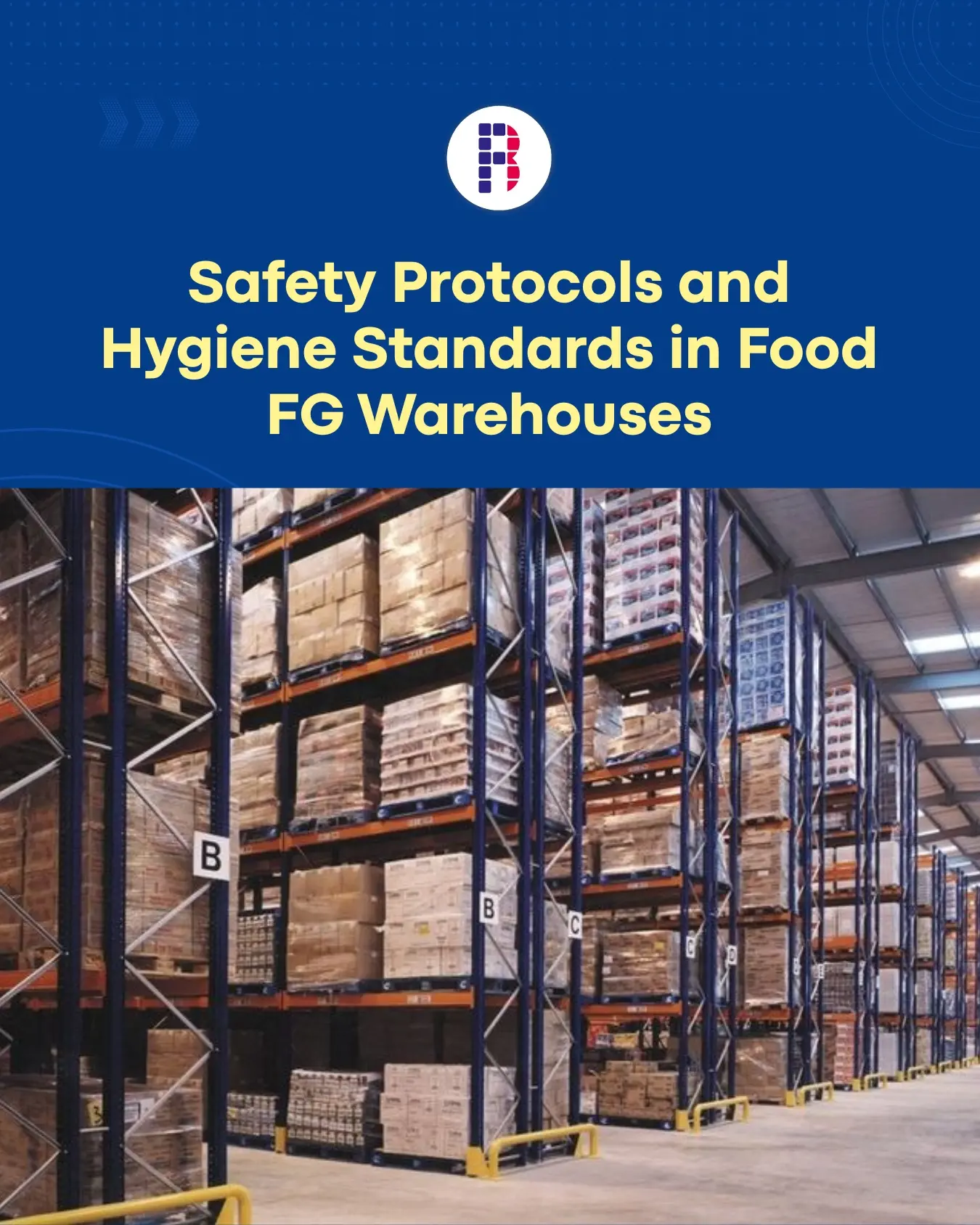
An FG warehouse is a designated storage area where finished food products are held before distribution. These warehouses may store ambient, chilled, or frozen products depending on the nature of the food. Since products are already packed and labelled, the focus in FG warehouses shifts from processing control to storage integrity, hygiene discipline, traceability, and physical safety.
Common risks in FG warehouses include pest infestation, temperature deviations, improper stacking, cross-contamination, and poor handling practices. Without structured safety and hygiene controls, these risks can compromise food safety and shelf life.
Key Safety Risks in Food FG Warehouses
FG warehouses face several operational and safety challenges that can compromise both product quality and personnel safety:
- Physical contamination: Damaged packaging, broken pallets, or foreign objects can contaminate finished goods.
- Chemical contamination: Improper storage of cleaning chemicals near food products increases the risk of chemical hazards.
- Biological risks: Rodents, insects, and microbial growth are common in poorly maintained facilities.
- Fire and electrical hazards: Faulty wiring, inadequate fire detection, or unsafe storage of flammable materials can lead to accidents.
- Unsafe material handling: Overstacking, unstable loads, or incorrect forklift operation can cause accidents and product damage.
Essential Safety Protocols in FG Warehouses
- Infrastructure and Layout Safety
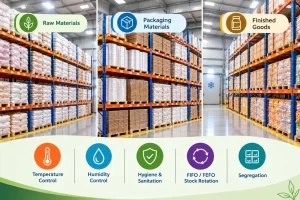
A well-designed warehouse layout forms the foundation of safety and hygiene in FG warehouses. Food and non-food materials must be strictly segregated to prevent cross-contamination, supported by clear zoning, floor markings, and appropriate signage.
Racking systems should be designed as per product weight and pallet configuration, with defined load capacities and regular inspections to identify structural damage. Adequate spacing between racks, walls, and ceilings allows effective cleaning, pest inspection, airflow, and fire protection coverage.
Clearly marked gangways, unobstructed emergency exits, sufficient lighting, and visible safety signage ensure safe movement of personnel and support compliance with statutory and food safety requirements.
- Equipment and Material Handling Safety
Only food-grade pallets and containers should be used for storing finished goods to maintain hygiene and prevent contamination. Forklifts and material handling equipment (MHE) must be operated by trained and authorised personnel, with clearly defined operating procedures to ensure safe handling of products and materials.
Preventive maintenance schedules are essential to minimise equipment failure and accident risks. Damaged pallets, broken cartons, or compromised packaging must be immediately identified, segregated, and managed through defined SOPs to prevent product contamination and accidental dispatch, thereby strengthening both safety and quality control.
- Fire and Emergency Safety Measures
Fire and emergency preparedness is a critical component of FG warehouse safety. Fire detection and firefighting systems such as smoke detectors, fire extinguishers, hydrants, and alarms must be installed as per legal requirements and tested at defined intervals to ensure readiness during emergencies.
Clearly documented emergency response and evacuation procedures, supported by regular mock drills, help employees respond effectively to fire or other emergency situations. Visible safety signage, clearly marked assembly points, and accessible emergency contact information further strengthen preparedness and minimise risks to people, products, and property.
Hygiene Standards for Food FG Warehouses
- Personal Hygiene Practices
People are one of the most significant risk factors in FG warehouses. Contract labour, shift rotations, and high workforce turnover make consistent hygiene behaviour difficult to sustain without structured systems.
Personnel hygiene protocols should clearly define requirements for PPE, hand hygiene, illness reporting, and movement between zones. Even though FG warehouses do not involve open product handling, improper PPE use, personal belongings in storage areas, or poor hygiene discipline can still introduce contamination risks.
Regular toolbox talks, visual hygiene reminders, and supervisory oversight help reinforce expected behaviours. When warehouse teams understand that their actions directly affect product safety, compliance improves naturally.
- Warehouse Hygiene and Sanitation
A structured cleaning and sanitation program ensures a hygienic storage environment. Floors, walls, racks, and loading docks should be cleaned as per defined schedules using approved food-safe chemicals. Cleaning records must be maintained to demonstrate compliance during audits and inspections.
Waste generated from damaged packaging or secondary materials should be promptly removed from the warehouse to prevent pest attraction and contamination.
- Pest Control Management
FG warehouses present unique pest control challenges due to long storage durations, high pallet density, frequent vehicle movement, and exposure at loading docks. Pests are attracted not only by food residues but also by damaged packaging and poorly managed waste areas.
An effective pest management program for FG warehouses includes well-defined trap placement, routine inspections, trend analysis, and corrective actions. Dock doors, drains, wall-floor junctions, and pallet storage zones require close monitoring.
Structural integrity, including sealing gaps and maintaining door curtains, is just as important as chemical controls.
Handling, Storage, and Damage Management Protocols
Packaging integrity is central to hygiene in FG warehouses. Damaged cartons, torn stretch wrap, or compromised primary packs increase exposure to dust, pests, and environmental contamination. Without clear protocols, damaged goods may be reintroduced into saleable stock unintentionally.
Effective safety systems define how damaged packs are identified, segregated, evaluated, and documented. Designated holding areas, clear labelling, and approval workflows prevent accidental dispatch of compromised goods.
Storage practices also matter. Pallets must be kept off the floor, away from walls, and arranged to allow inspection and cleaning. Overstacking, poor pallet quality, and unstable loads all increase hygiene and safety risks.
Environmental Monitoring and Temperature Control
Many FG warehouses handle products that are sensitive to temperature and humidity. Inadequate monitoring can allow slow quality degradation that goes unnoticed until products reach the market.
Continuous or high-frequency monitoring of temperature and humidity, supported by alarms and trend analysis, allows teams to respond quickly to deviations. Manual checks alone are often insufficient, especially in large or multi-zone warehouses.
Documentation Discipline and Audit Readiness
Hygiene and safety protocols are only as strong as the records that support them. FG warehouses must maintain accurate documentation for cleaning activities, pest control, temperature monitoring, damaged goods handling, and dispatch checks.
Auditors frequently focus on warehouses because documentation gaps are common at this stage. Missing signatures, overwritten entries, or delayed records weaken confidence in the overall food safety system.
Digital documentation systems help simplify compliance by providing timestamped entries, automated alerts for missed checks, and easy retrieval during audits..
How Beyzon Foodtek Pvt. Ltd. Supports Hygiene and Safety in FG Warehouses
Beyzon Foodtek Pvt. Ltd. supports manufacturers with warehouse design layout, hygiene audits, zoning optimisation, sanitation program design, pest control strategy alignment, digital monitoring integration, and documentation system strengthening. These interventions are then executed and validated on ground through structured Projects, ensuring that improvements translate into consistent day-to-day practice.
Specialised food manufacturing consultants work with food manufacturers to strengthen FG warehouse safety through practical, system-oriented interventions. Instead of addressing issues in isolation, warehouse hygiene is aligned with broader food safety, automation, and operational excellence initiatives.
This integrated approach helps manufacturers move from reactive hygiene fixes to stable, auditable warehouse safety systems.
Conclusion
Safety protocols and hygiene standards in food FG warehouses are fundamental to protecting product quality and maintaining regulatory confidence. As storage and dispatch environments grow more complex, manufacturers must apply the same discipline to warehouses as they do to production areas.
By defining clear hygiene standards, reinforcing behavioural controls, strengthening sanitation and pest management, and supporting systems with reliable documentation and monitoring, FG warehouses can become controlled extensions of the manufacturing process. With structured support from Beyzon Foodtek Pvt. Ltd., manufacturers are better equipped to sustain these standards and protect food safety through the final stages of the supply chain.
FAQs
Why are hygiene standards in FG warehouses critical even without open food handling?
Because damaged packaging, poor housekeeping, or pest exposure can contaminate finished products and compromise safety after manufacturing.
What are the most common hygiene gaps found in FG warehouses?
Inconsistent cleaning schedules, weak pest control, damaged packaging management failures, and poor documentation are frequent issues.
How often should FG warehouse hygiene audits be conducted?
Internal hygiene audits are typically recommended quarterly, with additional checks during peak storage or dispatch periods.
Can digital monitoring improve warehouse hygiene compliance?
Yes. Digital temperature, humidity, and sanitation monitoring improves visibility, reduces missed checks, and strengthens audit readiness.
How does Beyzon Foodtek Pvt. Ltd. help improve FG warehouse hygiene?
By combining audits, hygiene program design, digital monitoring integration, and on-ground execution through its Services and Projects, ensuring sustainable and auditable improvements.