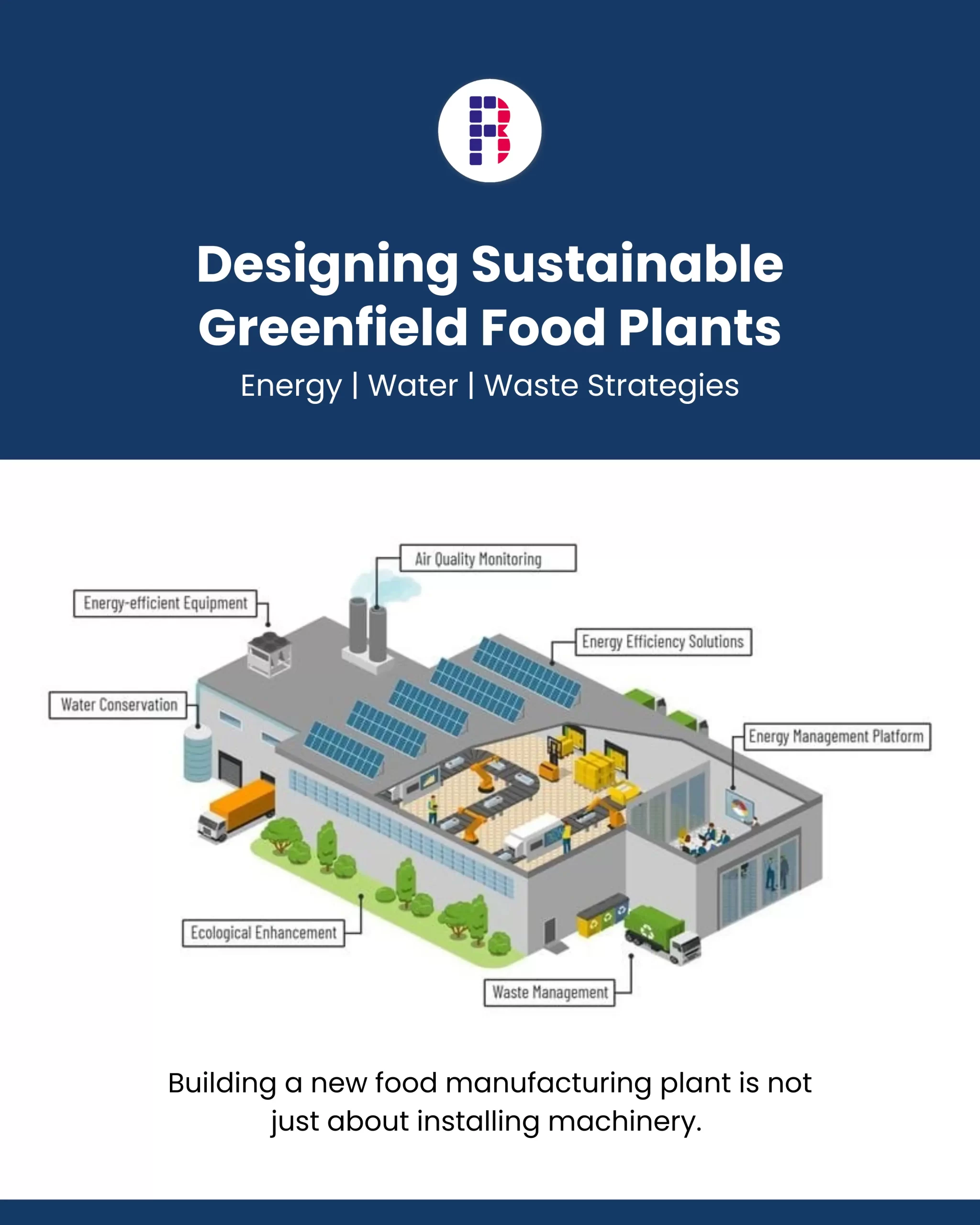
Setting up a greenfield food plant is one of the most critical investment decisions for a food business. The way utilities, processes and infrastructure are designed in the early stages directly influences operating cost, compliance, product quality and scalability for many years.
Sustainability in food plants is no longer limited to certifications or communication. Energy, water and waste management have become core design considerations that shape plant layout, technology choices and project economics. If they are integrated at the concept and engineering stage, the plant typically runs more efficiently, consumes fewer resources per kilogram of product and is easier to maintain.
This blog outlines a practical framework to embed energy, water and waste strategies into the design and execution of sustainable greenfield food plants, with specific relevance to food processing facilities.
Why Sustainability Must Be Built Into Greenfield Design
In a new food plant, every decision around layout, technology and utilities is still flexible. This makes the greenfield stage the ideal point to align sustainability with business objectives.
Key reasons to integrate energy, water and waste early:
- Direct impact on operating cost
Utilities often contribute a significant share of manufacturing cost. Decisions about boilers, refrigeration, air handling, compressed air and wastewater treatment at design stage define the long term cost base. - Compliance and risk management
Effluent quality, waste handling, worker safety and food safety are all linked to how utilities and flows are engineered. Poor planning can create recurring non-compliance risk and unplanned capital expenditure. - Future expansion and technology upgrade
Provision for higher capacity, new product categories and additional automation is easier when headers, spaces and utilities are planned with a long term view. - Investor and customer expectations
Buyers and investors increasingly expect visible sustainability actions in manufacturing. Plants that are efficient and compliant from the start are better positioned in audits and commercial negotiations.
A structured sustainability lens at concept stage prevents “retrofit” projects later, which are usually more expensive and disruptive.
Energy Management in Greenfield Food Plants
Energy strategy in a new food plant should focus on reducing specific energy consumption without compromising product safety or process reliability.
1. Define an energy philosophy at design stage
Before finalising layouts and equipment, it is important to define:
- Expected product mix and capacity scenarios
- Steam, hot water, refrigeration and air handling requirements
- Electrical load distribution and critical loads
- Preferred energy sources (electricity, gas, biogas, etc.) and backup philosophy
This allows utility systems to be sized realistically and aligned to actual operating profiles rather than generic thumb rules.
2. Build metering and monitoring into the design
Plants that measure energy properly can control it effectively. Practical provisions include:
- Separate meters for boilers, refrigeration, compressed air, HVAC and ETP
- Sub metering for major production blocks or lines
- Integration of meters with a simple monitoring dashboard and reporting routine
This supports specific energy consumption (SEC) tracking per kg of product, benchmarking across lines and early identification of abnormalities.
3. Optimise high energy systems
Typical focus areas in food plants:
- Refrigeration systems – correct compressor sizing, efficient evaporator and condenser selection, insulation and door management in cold rooms
- Boilers and thermal systems – condensate recovery, economisers, steam trap selection, insulation and regular audits
- Compressed air – avoiding leaks, using correct pressure levels and leveraging heat recovery from compressors where feasible
- Building services – efficient lighting, appropriate HVAC design for hygienic zones and sensible use of fresh air vs recirculation
Design decisions taken once at this stage can deliver sustained savings throughout plant life.
Water Stewardship in Greenfield Food Plants
Water in food manufacturing is both a critical input and a potential source of risk. A greenfield plant provides the opportunity to design a structured water management hierarchy from the start.
1. Map water grades and uses
A practical approach is to categorise water into:
- Product and process contact water
- Cleaning and CIP water
- Utility and service water (cooling towers, boilers, scrubbers)
- Non critical uses (gardening, toilets, etc.)
Each category should have clear quality requirements and designated treatment steps. This avoids using high quality water where it is not required and supports targeted treatment instead of a single uniform standard everywhere.
2. Reduce water consumption at source
Design and operational levers include:
- Preference for dry cleaning methods where possible before wet wash
- High pressure low flow cleaning devices with trigger control
- Optimised CIP systems with validated recipes and automated chemical dosing
- Drain layout that prevents mixing of relatively clean and high load streams
Reducing water at source immediately lowers effluent load and ETP sizing requirements.
3.Plan structured reuse and recycling
Once primary water uses and quality requirements are defined, selective reuse can be evaluated for non product contact applications such as:
- Cooling tower make up
- Gardening and landscaping
- Certain floor and external wash applications, as permitted by risk assessment
Treated water reuse is only effective when measurement, monitoring and documentation are part of plant design and SOPs.
Wastewater and Solid Waste Management
Wastewater and solid waste flows in a food plant must be engineered as deliberately as process flows.
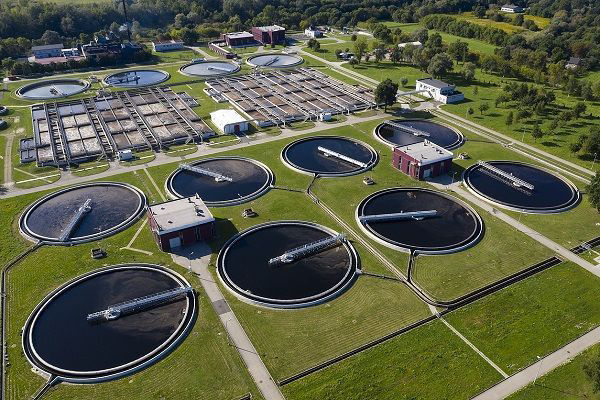
1. Wastewater design
Key principles:
- Design for peaks, not only averages – CIP cycles, changeovers and seasonal variations must be considered in hydraulic and organic load calculations.
- Stream segregation – oily, high strength and relatively clean streams should be routed separately to optimise treatment steps and costs.
- Flexibility for future regulations – space and tie ins for additional treatment units should be reserved where feasible, especially for stringent discharge norms or potential zero liquid discharge (ZLD) planning.
A correctly sized and designed Effluent Treatment Plant (ETP) or Sewage Treatment Plant (STP) prevents recurring compliance issues and unplanned corrective investments.
2. Solid waste and by product handling
For solid waste and by products, greenfield design should consider:
- Dedicated areas for waste segregation and storage
- Hygienic handling to avoid attracting pests and compromising food safety
- Opportunities for by product valorisation (for example peels, pulp, spent materials) where commercially viable
- Partnerships with authorised recyclers for packaging and other recyclable waste streams
This structured approach is essential to meet customer expectations, retailer requirements and regulatory norms.
Typical Design and Execution Gaps in Sustainability
Even when sustainability is mentioned in project objectives, several gaps commonly appear in execution:
- Utilities planned late, after civil layouts are mostly frozen
- Limited provision for metering, making long term monitoring difficult
- ETP design based only on average loads and generic food industry benchmarks
- No clear ownership for energy and water performance during commissioning and ramp up
- Inadequate documentation and SOPs for resource use and waste handling
These gaps result in higher specific consumption, difficulty in meeting effluent norms and recurrent rework after plant start up.
A disciplined approach ensures energy, water and waste are treated as core design packages, not as marginal topics.
Embedding Energy, Water and Waste Into the Project Lifecycle
To avoid the gaps described above, sustainability must be integrated into each phase of the greenfield project.
1. Concept and planning phase
- Set explicit energy, water and waste performance objectives.
- Include utility philosophy, water hierarchy and ETP strategy in the feasibility study.
- Ensure capital cost estimates for sustainability systems are realistically built into the project budget.
2. Design and engineering phase
- Align process flow, layout and hygienic zoning with utility routing and waste stream segregation.
- Freeze key design criteria for boilers, refrigeration, compressed air and ETP based on realistic operating profiles.
- Include metering points, sampling points and space for future expansion in detailed engineering.
3. Procurement and construction phase
- Use clear technical specifications that reflect sustainability requirements for equipment and systems.
- Coordinate civil foundations, drains and trenches with utility and process equipment to avoid rework.
- Verify that vendor offers include efficiency and performance commitments, not only nameplate capacities.
4. Commissioning and ramp up phase
- Plan structured trials for utilities, ETP and process equipment.
- Capture baseline specific consumption data from the first months of operation.
- Train operating teams on SOPs that protect energy efficiency, water discipline and waste handling standards.s.
When this lifecycle view is applied, sustainability becomes part of normal project execution rather than a separate initiative.
Governance, Monitoring and Digitalisation
Strong governance and simple monitoring tools are necessary to sustain performance after the project is handed over to operations.
Important elements include:
- Clear KPIs for energy, water and waste at plant and line level
- Periodic review forums that bring together production, maintenance, quality and finance
- Digital tools or simple dashboards that collate data from meters and log sheets
- Corrective action routines and structured root cause analysis when deviations appear
Beyzon Foodtek’s core strengths in operations excellence management, capacity scale ups, process line set up and master planning support precisely this kind of disciplined, measurable approach to greenfield design and execution.
How Beyzon Foodtek Can Help
Beyzon Foodtek Pvt. Ltd. is a specialised consultancy focused on food processing technology and manufacturing excellence. The company supports clients across start up assistance, feasibility studies, business planning, policies and procedures, food safety requirements and manufacturing facility set up or upgradation.
For sustainable greenfield food plants, Beyzon can assist in:
- Integrated planning of utilities and sustainability systems
Aligning process design, layout and utilities so that energy, water and waste requirements are built into early stage master planning. - Brownfield and greenfield project delivery
Leveraging decades of experience in managing small to large food manufacturing companies and delivering both brownfield and greenfield projects, including mechanisation, digitalisation and HSE management. - Operations excellence and continuous improvement
Establishing routines, KPIs and governance models that ensure energy, water and waste performance remains under control after commissioning, not only at project handover. - Training and documentation
Creating policies, procedures, food safety audits and staff training plans so that sustainability is reflected in day to day operations as well as in project documentation.
With a bespoke, client specific approach, Beyzon Foodtek works to maximise value for the allocated budget while ensuring that the new facility is efficient, compliant and future ready.
Conclusion
Designing sustainable greenfield food plants is fundamentally about making the right choices at the right time. When energy, water and waste are treated as central design pillars, the result is a plant that operates with lower specific consumption, fewer compliance challenges and better readiness for future growth.
Embedding clear sustainability objectives into concept planning, engineering, procurement, construction and commissioning provides a strong foundation for long term performance. With structured governance and support from experienced partners, food businesses can create greenfield facilities that are efficient, resilient and aligned with evolving industry expectations.
FAQs
1.Why should energy, water and waste be addressed during early design and not after commissioning?
Because layout, utility sizing, drain routing and equipment specifications are frozen during design. Addressing sustainability later usually leads to higher cost retrofits and disruption to running operations.
2. What is the most common gap in energy planning for greenfield food plants?
The absence of a metering and monitoring plan. Without proper sub-metering, plants struggle to track specific energy consumption and identify real saving opportunities.
3. How does water hierarchy help in a food plant?
Water hierarchy ensures that each application uses water of appropriate quality. This reduces treatment cost, improves hygiene control and enables structured reuse for non critical applications.
4. Why is stream segregation important for wastewater treatment?
Segregating oily, high strength and relatively clean streams allows the ETP to be designed more efficiently, reduces chemical consumption and improves the ability to meet discharge norms consistently.
5. How does Beyzon Foodtek add value to sustainable greenfield projects?
Beyzon combines food processing technology expertise with operations excellence, master planning and complete brownfield and greenfield project delivery, helping clients design and execute plants that are efficient, compliant and scalable from the start.