Pickles are widely consumed preserved foods made from fruits or vegetables using combinations of salt, oil, vinegar and spices. These preservation methods allow the product to remain stable over extended periods while developing characteristic flavour and texture. As packaged and branded pickle products continue to gain popularity across retail and food service markets, food manufacturers are increasingly establishing structured pickle processing units that can ensure consistent quality and controlled production environments.
In food manufacturing projects handled by Beyzon Foodtek Pvt. Ltd., pickle processing facilities are typically planned with careful attention to raw material handling, formulation control, hygienic processing areas and storage conditions. Because the shelf stability of pickles depends heavily on factors such as salt concentration, acidity levels and oil coverage, processing operations must be designed to maintain these parameters consistently throughout production.
This article outlines key considerations in planning a pickle processing unit, with particular focus on shelf stability, storage systems and quality control practices that support reliable manufacturing operations.
Types of Pickle Processing Units
Depending on investment capacity and target market, pickle units can be categorized as:
a. Small-Scale / Cottage Units
- Manual operations
- Low investment
- Limited production capacity
- Suitable for local markets
b. Semi-Automatic Units
- Combination of manual and mechanized processes
- Moderate investment
- Better consistency and hygiene
- Suitable for regional brands
c. Fully Automated Industrial Units
- High production capacity
- Advanced machinery and automation
- Consistent product quality
- Suitable for large-scale distribution and exports
Location & Infrastructure Planning
Proper location selection and infrastructure planning play an important role in ensuring smooth operations, cost efficiency, and product safety in a pickle processing unit.
Key Location Considerations
When selecting a site for a pickle processing unit, the following factors are typically considered:
- Proximity to Raw Material Sources
Locating the unit near farms or raw material markets helps reduce transportation time and cost, while also ensuring fresher inputs for processing. - Availability of Clean Water and Electricity
Adequate water supply is essential for washing and cleaning operations, while a reliable power source supports continuous processing and equipment operation. - Transportation and Connectivity
Good road access facilitates easy movement of raw materials to the unit and finished goods to markets or distribution centers. - Compliance with Local Regulations
The site should align with local zoning laws and environmental or pollution control norms to ensure smooth and compliant operations.
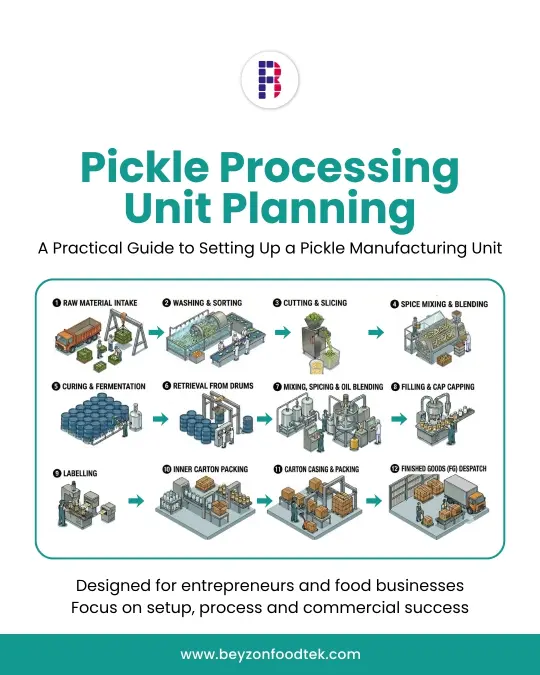
Understanding the Pickle Processing Flow
Pickle manufacturing follows a structured sequence of preparation and preservation steps designed to maintain product stability while ensuring consistent flavour.
A typical pickle processing flow includes:
Raw material reception → Washing and sorting → Cutting or preparation → Mixing with spices, salt and oil or brine → Curing or maturation → Filling and packaging → Storage and distribution
Each stage contributes to product preservation and quality. Maintaining hygiene and consistent formulation during these steps is essential to ensure that the final product remains safe and stable throughout its shelf life.
A well-designed process flow also improves operational efficiency and reduces the risk of contamination during production.
- Raw Material Handling and Preparation
Pickles can be produced from a variety of fruits and vegetables such as mango, cucumber, lemon, chilli, garlic and mixed vegetables. The quality of the raw material significantly influences the final product.
At the raw material intake stage, processing units typically implement procedures for:
- Sorting and visual inspection
- Removal of damaged or spoiled produce
- Washing to eliminate soil, dust and surface contaminants
Washing systems are particularly important because fresh produce may carry microbial loads from farms and transportation. Equipment such as bubble washers, spray washers or rotary vegetable washers are commonly used depending on the processing scale.
After cleaning, the raw materials are cut, sliced or prepared according to the specific pickle formulation.
- Mixing and Formulation
Pickle preservation relies on carefully balanced formulations of salt, spices, oil and acids. These ingredients create conditions that inhibit microbial growth while enhancing flavour development.
Mixing operations in pickle processing units may involve stainless steel mixing vessels, paddle mixers or ribbon mixers depending on the product type and production capacity.
Uniform distribution of ingredients is essential to maintain consistent taste and preservation characteristics across each batch. Standardised recipes and controlled ingredient dosing help ensure reliable product quality.
For certain pickle varieties, the product undergoes a curing or maturation period during which flavours develop and the preservation conditions stabilise before packaging.
- Shelf Stability Considerations
Shelf stability is one of the most important factors in pickle processing. The long shelf life of pickles is achieved through multiple preservation mechanisms.
Key factors influencing shelf stability include:
Salt concentration – High salt levels reduce microbial growth and contribute to long-term preservation.
Acidity levels – Vinegar or naturally occurring acids reduce pH levels, creating an environment that prevents the growth of spoilage organisms.
Oil coverage – In oil-based pickles, a protective layer of oil acts as a barrier against oxygen exposure and contamination.
Moisture control – Excess moisture can dilute preservation ingredients and increase the risk of spoilage.
Maintaining these parameters consistently during production is essential for ensuring product safety and shelf stability.
- Packaging and Filling Operations
Packaging plays an important role in protecting pickle products from contamination and environmental exposure. Proper packaging also helps maintain flavour and shelf life during storage and distribution.
Common packaging formats include:
- Glass jars
- PET containers
- Flexible pouches
- Bulk containers for food service applications
Depending on the production scale, filling operations may involve manual filling systems, semi-automatic fillers or automated packaging lines.
Proper sealing of containers is critical to prevent contamination and ensure that the preservation conditions remain intact.
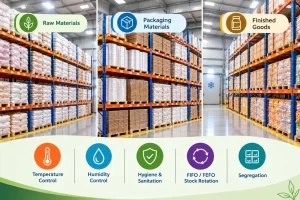
- Storage and Warehouse Planning
Storage conditions influence the stability and quality of pickle products after packaging. Processing units must therefore plan dedicated storage areas that maintain appropriate environmental conditions.
Key storage considerations include:
- Clean and dry warehouse environments
- Protection from direct sunlight
- Controlled temperatures where required
- Proper stacking and palletisation of containers
Oil-based pickles generally have longer shelf life, while vinegar-based pickles require monitoring of acidity levels to ensure consistent preservation.
Efficient storage systems also support inventory management and traceability.
Machinery & Equipment
The selection of machinery in a pickle processing unit depends largely on the scale of production, level of automation, and product range. Choosing the right equipment ensures operational efficiency, consistency in product quality, and better hygiene control.
Commonly Used Equipment:
- Washing tanks or bubble washers for effective cleaning
- Cutting and slicing machines for uniform preparation
- Mixing kettles or blenders for ingredient incorporation
- Oil heating systems for oil-based pickles
- Fermentation tanks or curing containers
- Filling and sealing machines for packaging
- Weighing and packaging systems
In modern processing units, partial or full automation is increasingly adopted to reduce manual handling, improve batch consistency, and maintain hygienic conditions throughout the production cycle.
Food Safety & Regulatory Compliance
Adhering to food safety standards is a fundamental requirement in pickle processing. Compliance not only ensures consumer safety but also builds credibility in the market.
Key Regulatory Requirements:
- FSSAI License or Registration as per business scale
- Implementation of Good Manufacturing Practices (GMP)
- Maintenance of proper sanitation and hygiene protocols
- Accurate and compliant product labeling, including:
- Ingredient list
- Nutritional information
- Shelf life and storage instructions
For medium to large-scale operations, adopting HACCP (Hazard Analysis and Critical Control Points) systems helps identify and control potential risks at every stage of production.
Quality Control Measures
Consistency in taste, texture, and shelf life is essential for establishing a reliable brand. Quality control systems must be integrated into every stage of production.
Key Quality Checks:
- Inspection and grading of raw materials
- Monitoring salt concentration and oil levels
- Control of moisture content to prevent spoilage
- Prevention of microbial contamination
- Verification of storage conditions
Routine testing and process monitoring help ensure that the final product meets safety standards and retains its quality throughout its shelf life.
Manpower Requirement
A pickle processing unit requires a balanced workforce comprising both skilled and unskilled personnel.
Typical Workforce Includes:
- Production workers for handling raw materials and processes
- Skilled machine operators
- Quality control personnel
- Supervisors for production oversight
- Packaging staff
Training employees in hygiene practices and food safety standards is essential to maintain product integrity and comply with regulatory norms.
Utilities & Operational Needs
Efficient functioning of a pickle processing unit depends on the availability and proper management of utilities.
Key Utility Requirements:
- Water: Must be clean and potable, used for washing and processing
- Electricity: Required for machinery, lighting, and operations
- Waste Management: Proper disposal systems for organic waste and wastewater
- Ventilation: Ensures a controlled environment, preventing moisture buildup and contamination
Proper planning of utilities contributes to smooth operations and long-term sustainability.
Cost Estimation Overview
The investment required for a pickle processing unit varies depending on scale, level of automation, and production capacity.
Based on Scale:
- Small-scale units: Lower investment with manual processes
- Medium-scale units: Moderate investment with semi-automation
- Large-scale units: High investment with advanced automation
Major Cost Components:
- Land and building infrastructure
- Machinery and equipment
- Raw materials and ingredients
- Labor and operational expenses
- Packaging and branding
A well-planned cost structure helps in achieving better financial control and profitability.
Packaging & Branding
Packaging is a critical factor in both product preservation and market success. It protects the product while also influencing consumer perception.
Common Packaging Formats:
- Glass jars
- PET containers
- Flexible pouches
Important Considerations:
- Airtight sealing to prevent contamination
- Use of food-grade packaging materials
- Clear, attractive, and compliant labeling
Effective packaging not only extends shelf life but also enhances product visibility and brand value in the market.
Challenges in Pickle Processing
Despite its potential, pickle processing comes with certain operational challenges.
Common Challenges:
- Seasonal availability and variability of raw materials
- Maintaining uniform taste and quality across batches
- Managing shelf life and preservation consistency
- High competition in both local and branded markets
Addressing these challenges requires proper planning, process standardisation, and quality control systems.
Conclusion
Pickle processing units combine traditional preservation techniques with organised manufacturing practices to produce stable and flavourful products. Planning such facilities requires careful attention to raw material preparation, formulation control, hygienic processing and appropriate storage systems.
Shelf stability in pickle products depends largely on maintaining the correct balance of salt, acidity, oil and moisture throughout the production process. At the same time, proper packaging, storage management and quality control procedures help ensure that the final product remains safe and consistent during its shelf life.
With structured process planning and effective operational practices, pickle processing units can achieve reliable manufacturing performance while meeting the growing demand for packaged pickle products.
FAQs
1. What are the main stages in pickle processing?
Pickle processing typically includes washing and preparation of raw materials, mixing with spices and preservatives, curing or maturation, packaging and storage.
2. How do pickles achieve a long shelf life?
Shelf life is maintained through preservation factors such as salt concentration, acidity, oil coverage and controlled moisture levels.
3. What packaging formats are commonly used for pickles?
Pickles are commonly packed in glass jars, PET containers, flexible pouches and bulk containers for commercial applications.
4. Why is acidity important in pickle production?
Acidity helps inhibit microbial growth and plays a key role in ensuring product safety and shelf stability.
5. What quality checks are required in pickle processing units?
Quality control usually includes monitoring salt and acidity levels, inspecting for foreign matter, testing microbiological quality and verifying packaging integrity.