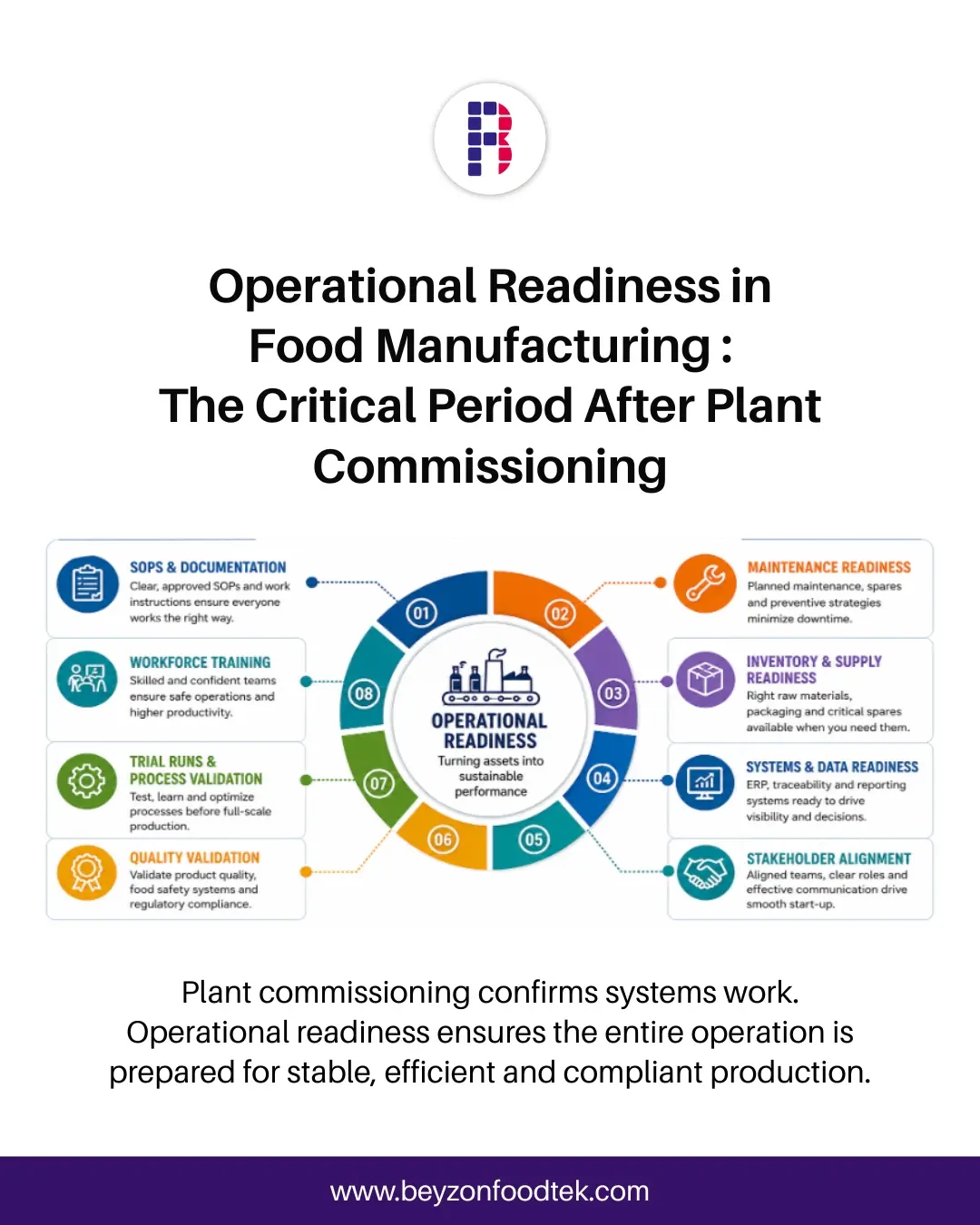
Operational Readiness in Food Manufacturing is one of the most important factors that determines whether a newly commissioned facility can achieve stable, efficient and compliant production. While plant commissioning confirms that equipment, utilities, and systems are installed and functioning as intended, the period immediately after commissioning is where manufacturing operations are truly tested.
Many food manufacturing facilities focus heavily on plant design, equipment installation, and commissioning activities. However, operational challenges often emerge when production begins and teams start working with actual products, processes, and production schedules. Operational readiness helps bridge the gap between a completed project and a fully functioning manufacturing operation.
For Beyzon Foodtek Pvt. Ltd., supporting manufacturers during this transition phase is an important part of building efficient, reliable, and future-ready food production facilities.
What Is Operational Readiness?
Operational readiness refers to the preparation of people, processes, systems, and resources required to successfully operate a manufacturing facility after commissioning is complete.
It ensures that the organization is ready to move from project execution to routine production operations.
Operational readiness typically includes:
- Workforce preparedness
- Process validation
- Production planning
- Quality system implementation
- Maintenance planning
- Documentation readiness
- Supply chain coordination
- Regulatory compliance preparation
The goal is to ensure that production can begin smoothly while maintaining safety, quality, and operational efficiency.
Why the Post-Commissioning Period Is Critical
The weeks and months following plant commissioning are often the most challenging phase of a manufacturing project.
During this period, businesses may face:
- Equipment performance variations
- Process inconsistencies
- Workforce learning curves
- Supply chain coordination issues
- Production scheduling challenges
- Quality deviations
- Documentation gaps
Although equipment may have successfully passed commissioning tests, real production conditions often reveal operational issues that require immediate attention.
A strong operational readiness program helps identify and resolve these challenges before they affect productivity and product quality.
Key Areas of Operational Readiness
Successful food manufacturing operations require multiple systems to work together effectively.
Key operational readiness areas include:
- Production operations
- Quality assurance
- Food safety systems
- Engineering and maintenance
- Warehousing and logistics
- Procurement and inventory management
- Human resources and training
- Regulatory compliance
Readiness across all these functions is essential for stable and efficient manufacturing performance.
Workforce Training and Competency Development
People play a critical role in the success of any manufacturing facility. Even the most advanced equipment cannot deliver expected results without trained operators and supervisors.
Operational readiness includes:
- Equipment operation training
- Process training
- Hygiene and sanitation training
- Food safety awareness programs
- Quality management training
- Emergency response preparation
Well-trained teams are better equipped to manage production challenges and maintain operational consistency.
Process Validation and Production Trials
Before full-scale production begins, manufacturers often conduct production trials to verify that processes perform as expected.
These activities may include:
- Trial production batches
- Product quality verification
- Process parameter validation
- Equipment performance testing
- Yield assessment
- Packaging verification
Production trials help identify opportunities for improvement while reducing the risk of quality or efficiency issues during commercial operations.
Documentation and Quality System Readiness
Operational readiness requires comprehensive documentation and quality systems to support daily manufacturing activities.
Important documents include:
- Standard operating procedures (SOPs)
- Quality manuals
- Cleaning procedures
- Maintenance schedules
- Batch manufacturing records
- Inspection checklists
- Food safety plans
Proper documentation improves consistency, traceability, and compliance across operations.
Maintenance and Asset Reliability Planning
Equipment reliability becomes increasingly important once commercial production begins.
Operational readiness involves preparing maintenance systems such as:
- Preventive maintenance programs
- Spare parts planning
- Equipment inspection schedules
- Breakdown response procedures
- Asset performance monitoring
Proactive maintenance planning helps reduce downtime and supports uninterrupted production.
Supply Chain and Inventory Readiness
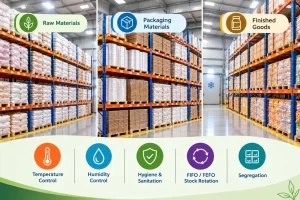
Manufacturing operations depend on the timely availability of raw materials, packaging materials, and supporting resources.
Operational readiness includes verifying:
- Supplier readiness
- Raw material availability
- Packaging material inventory
- Warehouse systems
- Inventory control procedures
- Material handling processes
Strong supply chain coordination helps prevent production disruptions during the startup phase.
Food Safety and Regulatory Compliance
Food safety systems must be fully operational before commercial manufacturing begins.
Critical readiness activities include:
- HACCP implementation
- Sanitation verification
- Allergen management procedures
- Traceability systems
- Internal audits
- Regulatory documentation reviews
Establishing these systems early helps manufacturers maintain compliance and build confidence in their production processes.
Common Challenges After Plant Commissioning
Many food manufacturers encounter similar challenges during the post-commissioning phase.
Common issues include:
- Lower-than-expected production efficiency
- Frequent equipment adjustments
- Incomplete documentation
- Operator errors
- Quality deviations
- Supply chain disruptions
- Maintenance planning gaps
Addressing these issues quickly can significantly improve operational performance and reduce startup-related losses.
The Role of Beyzon Foodtek Pvt. Ltd.
Beyzon Foodtek Pvt. Ltd. supports food manufacturers in strengthening operational readiness and improving manufacturing performance after plant commissioning.
This includes support in areas such as:
- Operations management
- Process optimization
- Food safety systems
- Manufacturing digitalization
- Mechanization and automation
- Workforce capability development
- Production efficiency improvement
By helping businesses establish structured operational systems, Beyzon supports smoother production startups and long-term manufacturing success.
Conclusion
Operational Readiness in Food Manufacturing is the foundation for successful production after plant commissioning. While commissioning verifies that equipment and systems are functioning correctly, operational readiness ensures that people, processes, quality systems, and supply chains are fully prepared to support commercial operations.
As food manufacturing facilities become more advanced and quality-focused, operational readiness is becoming increasingly important for achieving efficiency, consistency, and compliance. For Beyzon Foodtek Pvt. Ltd., helping manufacturers navigate this critical transition phase is an important part of building reliable and future-ready production environments.
FAQs
1. What is operational readiness in food manufacturing?
Operational readiness is the process of preparing people, processes, systems, and resources to successfully operate a food manufacturing facility after commissioning is completed.
2. Why is the post-commissioning period important?
The post-commissioning period is when actual production begins, making it the stage where operational, quality, and efficiency challenges are often identified and resolved.
3. What activities are included in operational readiness?
Activities include workforce training, process validation, quality system implementation, maintenance planning, supply chain preparation, and compliance readiness.
4. How does operational readiness support food safety?
It ensures food safety systems, sanitation procedures, documentation, traceability processes, and quality controls are fully established before commercial production starts.
5. How can manufacturers improve operational readiness?
Manufacturers can improve readiness through structured planning, employee training, process validation, strong documentation systems, and effective operational management practices.