Understanding Line Clearance in Food Manufacturing is important for maintaining food safety, product quality, and smooth production operations inside a factory. In food manufacturing environments, even small mistakes such as leftover materials, incorrect labels, or packaging mix-ups can create serious quality and compliance issues. Line clearance helps prevent these problems by ensuring that production lines are properly cleaned, checked, and approved before the next batch begins.
Line clearance is a standard operational practice followed in many food factories to avoid contamination, product mix-ups, and packaging errors. It ensures that the production area is fully ready before a new manufacturing process starts.
For Beyzon Foodtek Pvt. Ltd., improving operational discipline and manufacturing systems is an important part of building efficient and reliable food production environments.
What Is Line Clearance?
Line clearance is the process of checking and confirming that a production line is free from materials, documents, labels, products, or residues from the previous production batch before starting a new one.
This process is usually performed:
- Before starting production
- During product changeovers
- After cleaning procedures
- Before packaging operations
- Before introducing new raw materials
The purpose is simple — to ensure the correct product is manufactured under clean and controlled conditions.
Why Line Clearance Is Important
Food manufacturing requires strict hygiene and operational control. Without proper line clearance, factories may face:
- Product contamination
- Incorrect labeling
- Batch mix-ups
- Packaging errors
- Allergen cross-contact
- Product recalls
- Regulatory non-compliance
A small oversight on a production line can affect large quantities of products. This is why line clearance is considered a critical part of quality assurance and food safety systems.
Proper line clearance also improves production confidence and operational consistency.
What Is Checked During Line Clearance?
During line clearance, production and quality teams inspect the manufacturing area carefully before approving the next batch.
Common checks include:
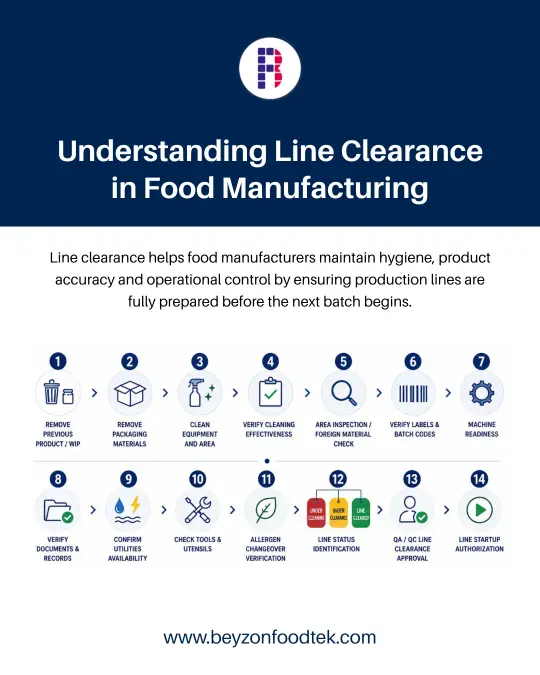
- Removal of leftover raw materials
- Removal of previous packaging materials
- Cleaning verification
- Equipment cleanliness
- Correct labels and batch codes
- Availability of approved documents
- Machine readiness
- Proper storage of unused materials
The inspection ensures the line is fully prepared for the next production run without risk of mix-up or contamination.
Line Clearance During Packaging Operations
Packaging lines require especially strict line clearance procedures because packaging errors can directly affect consumers and product traceability.
Packaging line clearance may include:
- Verification of product labels
- Barcode checking
- Batch coding verification
- Removal of old cartons or wrappers
- Correct packaging material confirmation
- Empty line inspection before startup
Incorrect packaging or labeling can lead to product recalls, customer complaints, and regulatory issues. For this reason, packaging line clearance is treated very seriously in food factories.
The Role of Documentation
Line clearance is not only a physical inspection process. Proper documentation is also important.
Factories often maintain:
- Line clearance checklists
- Cleaning records
- Batch approval forms
- QA verification reports
- Production startup approvals
These records help maintain traceability and demonstrate compliance during audits or inspections. Strong documentation systems also improve accountability and operational discipline.
How Line Clearance Supports Food Safety
Food safety depends heavily on preventing contamination and product mix-ups. Line clearance supports this by ensuring production areas are clean, organized, and properly prepared before manufacturing begins.
It helps reduce risks related to:
- Allergen contamination
- Foreign material contamination
- Product mix-ups
- Incorrect ingredient usage
- Packaging confusion
In facilities producing multiple products on shared equipment, line clearance becomes even more important.
Common Challenges in Line Clearance
Many factories face operational challenges while maintaining proper line clearance procedures.
Common issues include:
- Incomplete cleaning
- Rushed production changeovers
- Poor documentation
- Human error
- Lack of staff training
- Inadequate supervision
- Incorrect label handling
When production pressure increases, line clearance procedures may sometimes be rushed. However, skipping proper checks can create much larger operational and financial risks later.
How Automation Helps Improve Line Clearance
Modern food factories are increasingly using automation and digital systems to strengthen line clearance procedures.
Examples include:
- Digital checklists
- Barcode verification systems
- Automated batch coding systems
- Sensor-based inspections
- Real-time production monitoring
- Electronic approval systems
These systems help improve accuracy, reduce manual errors, and strengthen traceability throughout production operations. Automation also helps factories maintain better compliance and operational control.
The Role of Beyzon Foodtek Pvt. Ltd.
Beyzon Foodtek Pvt. Ltd. supports food manufacturers in improving operational systems, process discipline, and manufacturing efficiency.
This includes support in areas such as:
- Food safety systems
- Operations management
- Process optimization
- Manufacturing digitalization
- Mechanization and automation
- Production efficiency improvement
- Quality-focused operational systems
Strong line clearance practices help manufacturers improve consistency, reduce operational risks, and maintain higher production standards.
Conclusion
Understanding Line Clearance in Food Manufacturing is essential for maintaining food safety, operational discipline, and product quality. From cleaning verification to packaging checks, line clearance helps ensure every production batch begins under safe and controlled conditions.
As food manufacturing continues to become more quality-focused and compliance-driven, strong line clearance systems are becoming increasingly important across the industry.
For Beyzon Foodtek Pvt. Ltd., supporting efficient and reliable manufacturing systems is part of helping food businesses build stronger and future-ready production environments.
FAQs
1. What is line clearance in food manufacturing?
Line clearance is the process of checking and approving a production line before starting a new batch to prevent contamination and product mix-ups.
2. Why is line clearance important?
It helps maintain food safety, prevent labeling errors, reduce contamination risks, and improve production accuracy.
3. Who performs line clearance in a food factory?
Line clearance is usually performed by production teams along with quality assurance or quality control personnel.
4. What areas are checked during line clearance?
Factories check equipment cleanliness, leftover materials, packaging materials, labels, documents, and machine readiness.
5. How does automation improve line clearance?
Automation improves inspection accuracy, traceability, documentation management, and operational control while reducing manual errors.