Transitioning from Founder-Dependent Operations to System-Driven Food Manufacturing is an important step for food businesses that want to scale sustainably and improve operational consistency. Many growing food companies begin with founders directly managing production decisions, quality checks, procurement activities, and daily problem-solving. While this approach may work in the early stages, it often becomes a limitation as production volumes increase.
As food manufacturing operations grow, relying heavily on one individual can create bottlenecks, operational risks, and inefficiencies. System-driven manufacturing helps businesses build structured processes that support growth, improve accountability, and maintain product quality.
For Beyzon Foodtek Pvt. Ltd., helping food manufacturers build stronger operational systems is an important part of creating efficient and future-ready production environments.
What Are Founder-Dependent Operations?
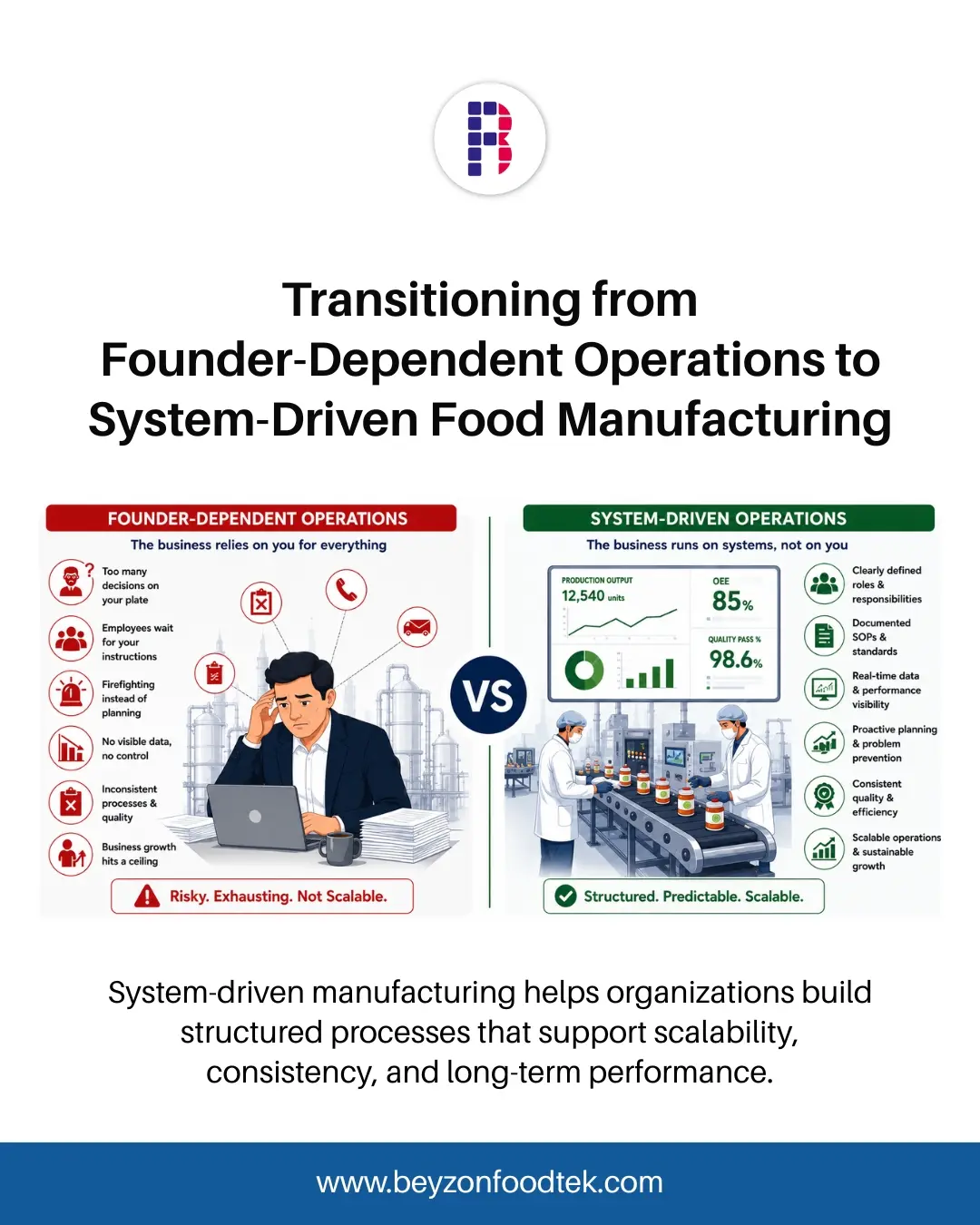
Founder-dependent operations refer to business environments where critical decisions, approvals, and operational knowledge are concentrated with the founder or a small group of key individuals.
In many food manufacturing businesses, founders are directly involved in:
- Production planning
- Procurement decisions
- Quality approvals
- Vendor management
- Inventory control
- Customer communication
- Problem resolution
While this involvement often helps businesses establish strong foundations, excessive dependence on founders can make growth difficult.
Why Founder Dependency Becomes a Challenge
As production volumes increase, operational complexity also grows. When most decisions depend on a founder’s availability, delays and inefficiencies can occur.
Common challenges include:
- Slow decision-making
- Limited scalability
- Operational bottlenecks
- Knowledge concentration
- Inconsistent processes
- Difficulty managing multiple facilities
- Reduced organizational agility
Businesses may struggle to maintain consistency when critical knowledge is not documented or shared across teams.
What Is System-Driven Food Manufacturing?
System-driven food manufacturing is an operational approach where processes, procedures, and management systems guide production activities rather than individual decision-making.
In a system-driven environment:
- Roles and responsibilities are clearly defined
- Standard operating procedures (SOPs) are documented
- Decisions follow established workflows
- Performance is measured using data
- Training systems are structured
- Processes remain consistent regardless of personnel changes
This approach helps create stable and repeatable manufacturing operations.
Key Components of a System-Driven Manufacturing Environment
Building a system-driven operation requires the development of several operational foundations.
Key components include:
- Standard operating procedures
- Process documentation
- Quality management systems
- Production planning systems
- Inventory management systems
- Training programs
- Performance monitoring frameworks
- Reporting structures
Together, these elements help create a manufacturing environment that can function efficiently without constant founder intervention.
The Importance of Process Documentation
Documentation plays a critical role in reducing operational dependency on individuals.
Food manufacturers often document:
- Production procedures
- Quality standards
- Cleaning processes
- Equipment operating instructions
- Maintenance schedules
- Material handling procedures
- Packaging guidelines
Proper documentation helps ensure knowledge remains within the organization and can be consistently followed by employees.
Building Accountability Across Teams
Founder-dependent businesses often rely on informal communication and direct supervision. As organizations grow, accountability must be distributed across departments and management levels.
System-driven operations establish accountability through:
- Defined job responsibilities
- Performance metrics
- Departmental ownership
- Reporting structures
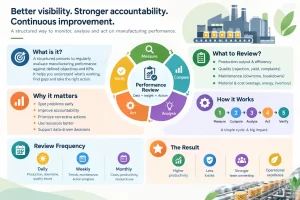
- Review mechanisms
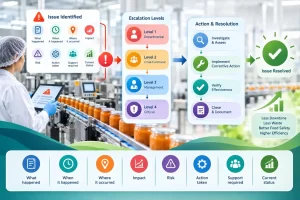
- Escalation procedures
Clear accountability improves operational control and reduces dependence on individual oversight.
The Role of Technology in System-Driven Manufacturing
Digital tools and automation technologies help strengthen operational systems and improve visibility across manufacturing processes.
Common technologies include:
- Enterprise Resource Planning (ERP) systems
- Manufacturing Execution Systems (MES)
- Inventory management software
- Digital quality management systems
- Production monitoring tools
- Automated reporting systems
- Data analytics platforms
These solutions help standardize workflows, improve traceability, and support informed decision-making.
How System-Driven Operations Support Food Safety
Food safety systems perform best when supported by consistent processes rather than individual judgment alone.
System-driven manufacturing helps improve:
- SOP compliance
- Batch traceability
- Documentation accuracy
- Cleaning verification
- Quality control processes
- Regulatory compliance
- Audit preparedness
Strong operational systems reduce variability and help maintain food safety standards across production activities.
Common Challenges During the Transition
Moving from founder-dependent operations to system-driven manufacturing can present several challenges.
Common obstacles include:
- Resistance to change
- Lack of process documentation
- Limited middle-management capability
- Inconsistent training practices
- Poor data collection systems
- Unclear responsibilities
- Dependence on informal decision-making
Successful transitions require leadership commitment, employee involvement, and continuous improvement efforts.
The Role of Beyzon Foodtek Pvt. Ltd.
Beyzon Foodtek Pvt. Ltd. supports food manufacturers in strengthening operational systems and building scalable manufacturing environments.
This includes support in areas such as:
- Operations management
- Manufacturing digitalization
- Process optimization
- Food safety systems
- Quality management frameworks
- Mechanization and automation
- Production efficiency improvement
By helping organizations create structured and repeatable processes, Beyzon supports manufacturers in reducing operational dependency and improving long-term performance.
Conclusion
Transitioning from Founder-Dependent Operations to System-Driven Food Manufacturing is a critical step for businesses seeking sustainable growth, operational consistency, and improved manufacturing performance. As food production becomes more complex and competitive, organizations must move beyond individual-driven decision-making and build systems that support efficiency, quality, and accountability.
Strong operational systems help businesses scale confidently while maintaining food safety, product quality, and production reliability. For Beyzon Foodtek Pvt. Ltd., supporting this transformation is an important part of helping food manufacturers create resilient and future-ready operations.
FAQs
1. What are founder-dependent operations in food manufacturing?
Founder-dependent operations are manufacturing environments where key decisions, knowledge, and operational control rely heavily on the founder or a small group of individuals.
2. Why is founder dependency a challenge for growing food businesses?
It can create bottlenecks, slow decision-making, limit scalability, and increase operational risks when critical knowledge is not shared across the organization.
3. What is system-driven food manufacturing?
System-driven manufacturing uses documented processes, defined responsibilities, operational systems, and performance monitoring to manage production activities consistently.
4. How do SOPs help reduce founder dependency?
Standard operating procedures document critical processes and provide clear instructions, allowing employees to perform tasks consistently without constant supervision.
5. How does technology support system-driven manufacturing?
Technology helps standardize workflows, improve traceability, automate reporting, strengthen data management, and support more efficient operational decision-making.